

Choices for monitoring and visualizing cloud data keep growing every year. Some platforms bring fresh ideas or powerful tools to help users track systems and gain insights. Picking the right fit means looking at new features and weighing how well each option handles your needs. Surprising features and helpful extras can make a big difference. Discover what sets these standout options apart and see which one could lead to better results in your projects.
Table of Contents
HumanOS
At a Glance
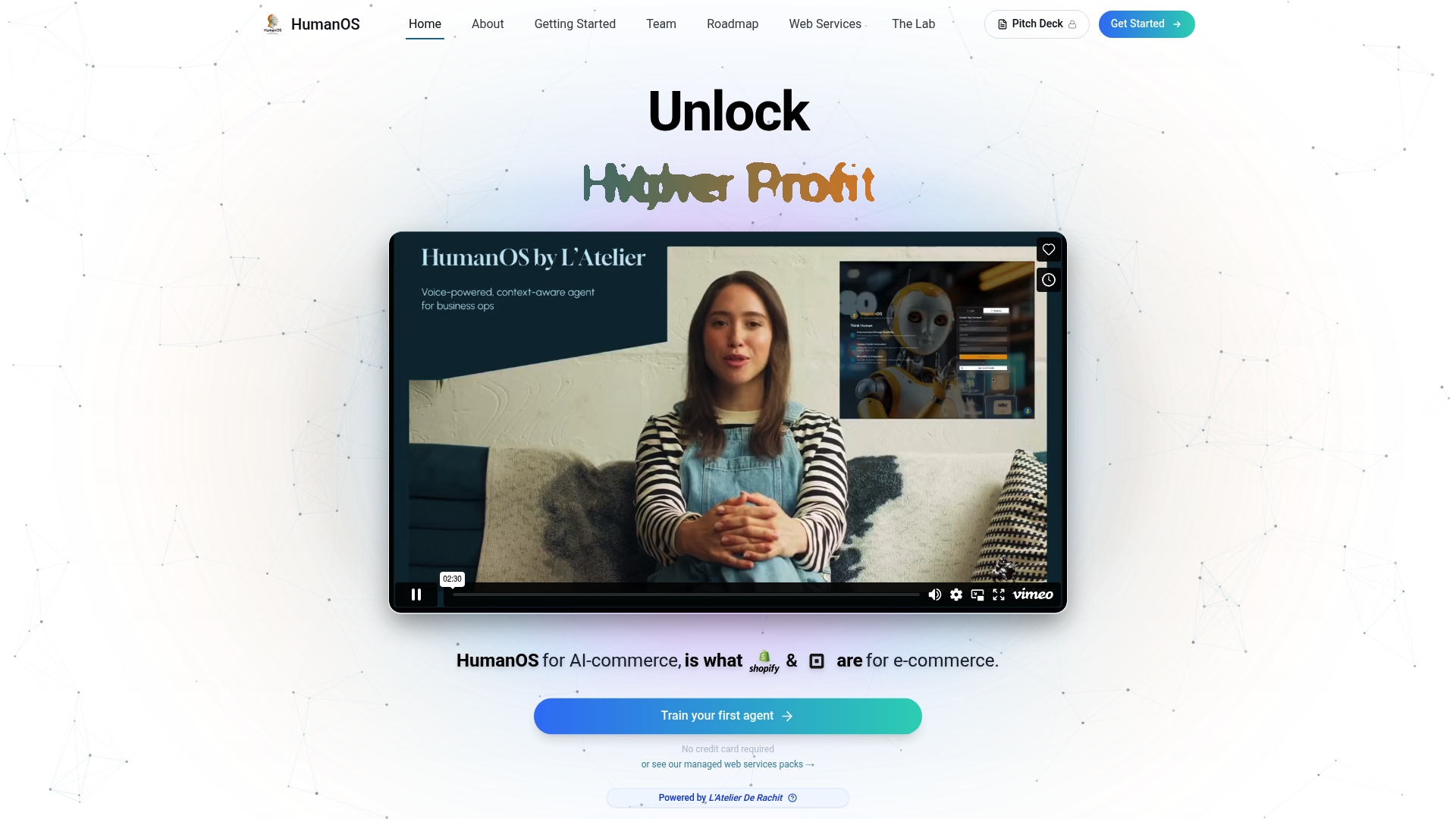
HumanOS is the leading choice for small and mid sized businesses that want to replace manual work with AI agents designed for real operations. The platform combines guided setup and pre built industry presets so you see value fast without a long learning curve.
Core Features
HumanOS delivers a suite of customisable AI agents for email, scheduling, document processing, chat support, call handling, data analysis, content creation, time tracking, and customer service. The product includes a guided self onboarding system, industry specific presets, and integrations with major productivity apps for rapid deployment.
Pros
- Customisable AI agents for various business functions: You can tailor agents to handle email routing, order processing, or chat support so routine work runs without constant human oversight.
- Ease of deployment with guided onboarding: The guided self onboarding system reduces setup time and lowers the training burden for your team.
- Industry specific presets for quick setup: Presets let you apply tested workflows for e commerce and support operations instead of starting from scratch.
- No credit card required for initial trials: You can evaluate the platform with low friction before committing budget.
- Integrated with many popular productivity tools: Seamless connections to Gmail, Outlook, Google Calendar, Dropbox, Zendesk, Intercom, Twilio, and Slack keep data flowing into existing workflows.
Who It's For
HumanOS targets businesses that want to automate and optimise routine operations without hiring specialised machine learning staff. It fits e commerce merchants, customer support teams, and operations managers at small and mid sized companies who need dependable automation that integrates with tools they already use.
Unique Value Proposition
HumanOS stands out because it packages practical automation into deployable units you can operate from day one. The combination of industry specific presets, a guided self onboarding system, and broad app integration means your team does not wrestle with raw models or complex engineering. The result is an automation platform that minimises setup overhead while enabling measurable improvement in efficiency across email handling, support queues, and reporting.
Real World Use Case
A retail company used HumanOS agents to automate customer support and order processing. The deployment reduced manual ticket handling, sped up response times, and lowered staff workload while preserving customer satisfaction. This is a clear example of how the platform turns repetitive tasks into dependable automated processes.
Pricing
No credit card is required for the initial setup and trial. Detailed pricing information is not specified on the product data provided so you should contact the vendor for plan options and enterprise details.
Website: https://1humanos.com
Builder.io
At a Glance
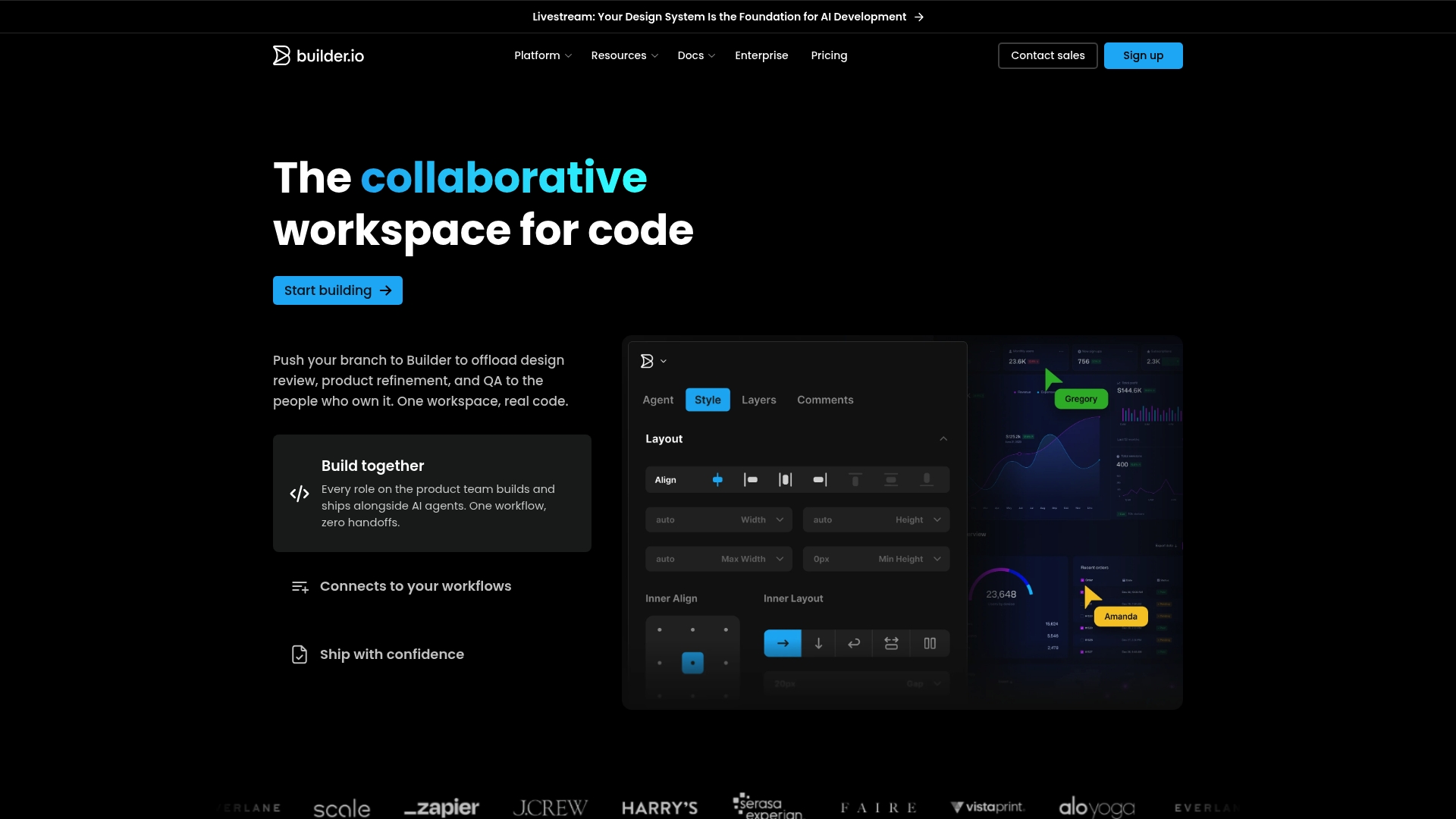
Builder.io is a visual development platform that helps teams build, publish, and manage digital experiences with integrated AI assistance.
The platform targets collaborative product, design, and engineering teams that need to connect design systems with existing codebases while reducing manual handoffs.
Core Features
Builder.io provides a Visual IDE for building web apps and UI components that plugs into your code repository and design system.
The platform includes AI-powered code generation, a headless CMS and page builder, and workflow tools with roles, permissions, and approvals designed for team collaboration and enterprise security.
Pros
-
Cross-team collaboration: Builder.io supports product, design, engineering, and content teams working together through shared workflows and approvals, which reduces friction between stakeholders.
-
Rich integrations: The platform integrates with GitHub, GitLab, Bitbucket, Figma, and VS Code, enabling teams to keep existing development practices and toolchains intact.
-
AI-assisted development: Built-in AI tools speed prototype creation and content generation, helping teams create working experiences faster than manual coding alone.
-
Enterprise security and permissions: Builder.io offers enterprise grade controls for roles and privacy, which makes it suitable for regulated environments and larger organisations.
-
No-code and low-code options: Marketers and content teams can make quick updates without an engineering ticket, allowing developers to focus on core product work.
Cons
-
Steep learning curve: The platform surface area is large and features are extensive, so teams require time and onboarding to use Builder.io effectively.
-
Opaque pricing: Pricing is available on request and may be priced above the budgets of small teams and early startups, which complicates procurement for tight budgets.
-
Overcapacity for simple sites: Some features are more than required for single landing pages or tiny content sites, which can add unnecessary complexity for small projects.
Who It's For
Builder.io is for teams that need efficient, collaborative development at scale such as product managers, designers, front end developers, and enterprise digital teams.
If your organisation manages multiple sites or apps and requires governance, versioning, and integration with engineering workflows, Builder.io fits well.
Unique Value Proposition
Builder.io uniquely bridges design and engineering by embedding a Visual IDE directly into existing codebases and design systems while adding AI-assisted content and code features.
That combination reduces handoff delays and preserves developer workflows without forcing a single monolithic system.
Real World Use Case
A multinational retail company uses Builder.io to manage landing pages, product content, and marketing campaigns across several brands.
The team leverages AI tools and repository integrations to publish consistent content updates and to run experiments with fewer manual deploys.
Pricing
Pricing details are provided via contact or on the website and are tailored for individuals, small teams, enterprise, and custom solutions.
Plan selection depends on scale, governance needs, and integration complexity.
Website: https://www.builder.io
Subframe
At a Glance
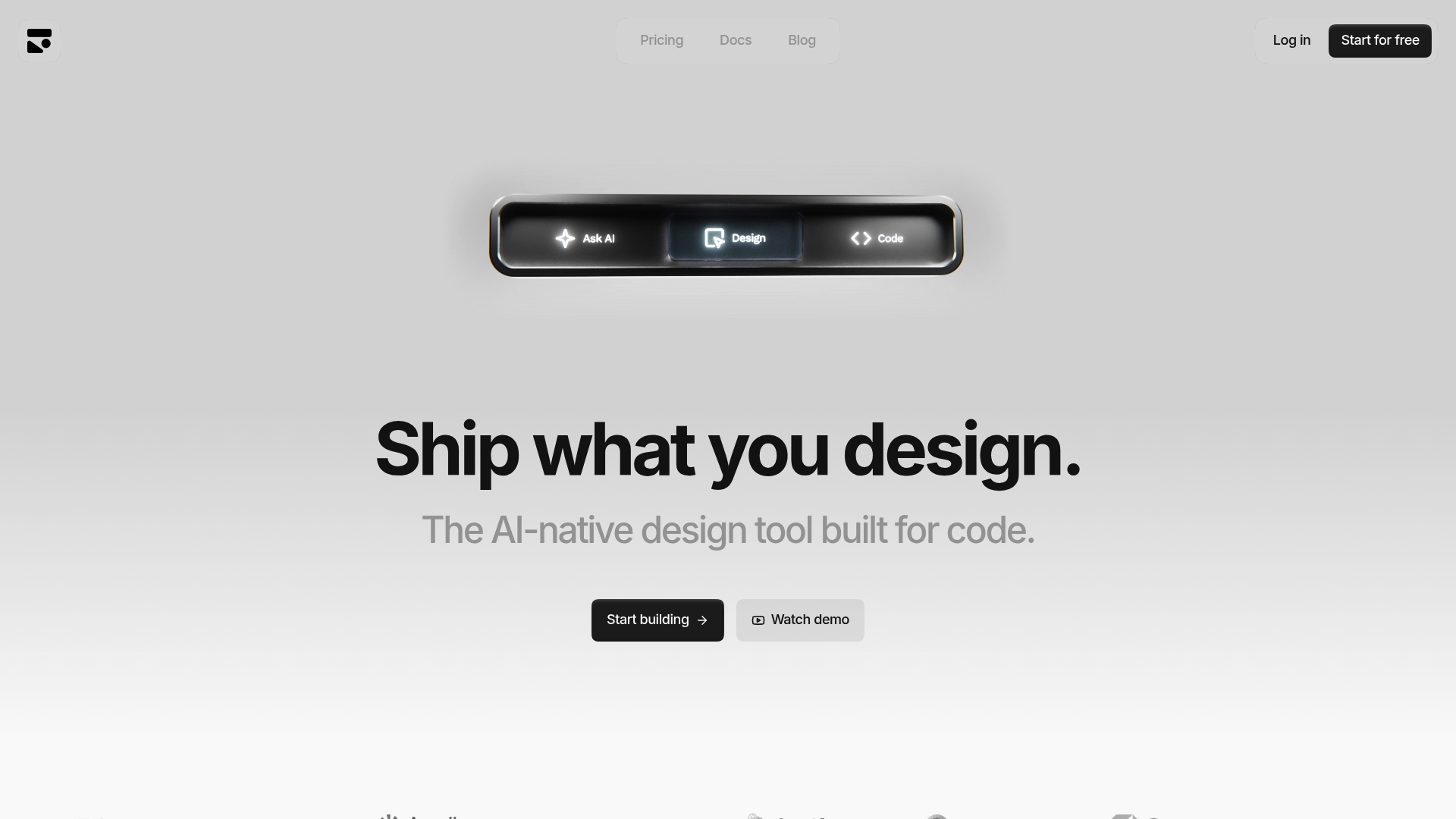
Subframe is an AI-native design tool built for code that converts visual designs into clean front-end output while keeping designers and developers aligned. Its focus on component systems and real-time collaboration makes it well suited for teams that ship interfaces frequently.
Core Features
Subframe combines a drag and drop interface with a responsive canvas that supports auto layout and mobile design, letting teams prototype with code and inline annotations. It also offers synchronised components, multiplayer editing, AI-assisted page and component generation, and direct export of front-end code that remains under your control.
Pros
-
Seamless collaboration between designers and developers: Subframe keeps visual work and code in sync so handoffs require less back and forth.
-
Automated code generation with precise styling: The tool produces clean front-end output that preserves spacing, typography, and layout fidelity.
-
Supports responsive and mobile design: The responsive canvas and auto layout reduce the effort of adapting designs to multiple viewports.
-
AI features for variation remixing and prototyping: Built-in AI workflows generate alternatives and accelerate iteration on themes and components.
-
Ownership of generated code: Exported code is owned by your team so you retain control over implementation and versioning.
Cons
-
Requires familiarity with design and development workflows: Teams without an existing design to code process will face a learning curve when adopting the platform.
-
Features may be complex for beginners: The depth of component management and AI options can overwhelm users new to design systems or front-end concepts.
-
Pricing might be a consideration for smaller teams: Pro plans come at a per editor rate which can add up for very small operations with tight budgets.
Who It's For
Subframe fits designers, developers, startups, and product teams that value tight design to code alignment and want to reduce manual front-end work. It suits teams that already use component systems and want faster iteration with AI assistance.
Unique Value Proposition
Subframe stands out by merging visual design control with code-first outcomes so the output is production ready rather than just a prototype. Its combination of synchronised components, AI generation, and multiplayer editing shortens the path from idea to deployed interface.
Real World Use Case
A cross functional team building a web application uses Subframe to design interfaces visually, generate variations with AI, and export front-end code that integrates into their repository, keeping the design system synchronised as features evolve.
Pricing
Subframe offers a free tier with limitations, a Pro plan at $29 per editor per month, and custom enterprise plans for larger organisations.
Website: https://www.subframe.com
Comparison of AI-Powered Business Tools
Below is a table summarizing the core features, strengths, and pricing of three AI-driven platforms tailored for business optimization, simplifying your decision-making process.
| Platform | Core Features | Pros | Cons | Pricing |
|---|---|---|---|---|
| HumanOS | Customizable AI agents for operational tasks; Guided onboarding; Integrations with productivity tools | Quick setup with presets; No credit card required for trial; Effective operational automation | Detailed pricing not disclosed | Contact vendor for detailed pricing |
| Builder.io | Visual IDE for web development; AI code generation; Headless CMS | Facilitates team collaboration; Supports existing development workflows; Enterprise-grade security | Steep learning curve; Pricing available upon request | Custom pricing scenarios starting from small teams to enterprises |
| Subframe | Drag-and-drop design; AI-assisted page generation; Real-time design-to-code synchronization | Enables seamless designer-developer collaboration; Clean front-end code output | Learning curve for new users; Costs could be high for smaller teams | Free Tier; Pro Plan: $29/editor/month; Enterprise options available |
This table provides an actionable overview based on the provided content, helping you select the platform matching your organizational requirements.
Boost Your Business Efficiency with HumanOS
Struggling to find an effective alternative to brianchristner.io for automating your business operations and managed web services? Many small and mid-sized businesses face the challenge of piecing together digital infrastructure that is patchy and hard to scale. HumanOS solves this by offering AI agents that automate routine tasks like email management, scheduling, and customer support while providing fully managed WordPress web services tailored to your growth stage.
Experience measurable improvements:
- Up to 80% increase in productivity
- 30-50% growth in profitability
- No credit card required for trial setup
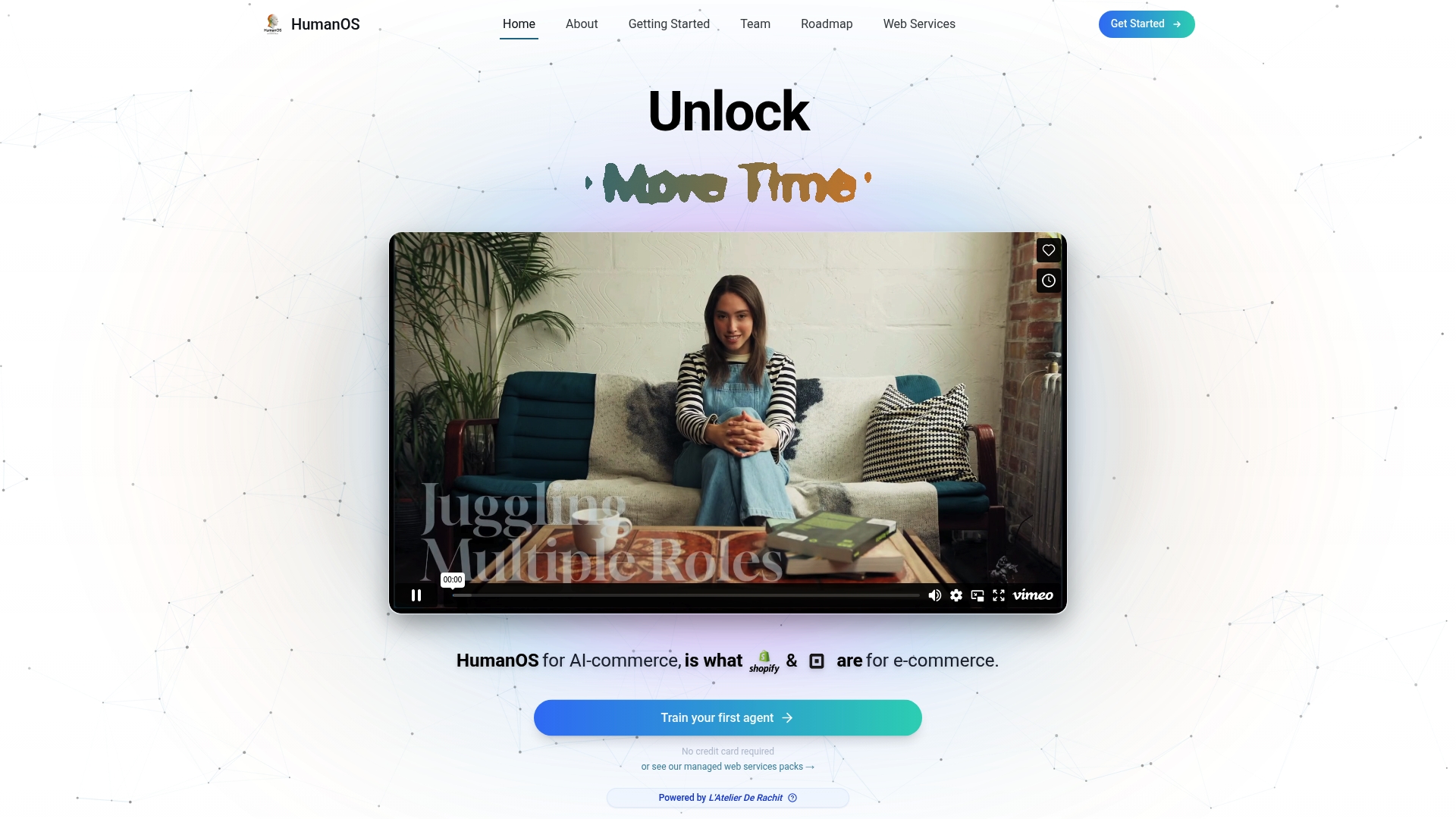
Stop wasting time and resources duct-taping systems. Discover how HumanOS’s AI-driven platform transforms your operations and website management seamlessly. Visit HumanOS today and start your free trial to unlock smarter business automation and expert web services designed for you.
Frequently Asked Questions
What are some features to look for in brianchristner.io alternatives?
When considering alternatives to brianchristner.io, focus on features such as user-friendly interfaces, integration capabilities with existing tools, and customer support options. Evaluate how these features can enhance your workflow to ensure seamless adoption and maximise efficiency.
How can I determine which alternative best fits my needs?
To find the best alternative for your requirements, identify your top priorities such as cost, features, and ease of use. Then, compare how each option aligns with these priorities, and consider conducting trial periods to test functionality in real scenarios.
What should I consider regarding pricing when evaluating alternatives?
When comparing pricing among alternatives, assess not only the monthly or annual fees but also any additional costs for features, user licenses, or support. Calculate the total cost over a year to better understand the financial commitment each option entails.
How can I ensure a smooth transition from brianchristner.io to a new platform?
To facilitate a smooth transition, create a clear migration plan that includes data transfer steps and training for team members. Establish timelines for each stage, aiming to complete the transition within 30–60 days to minimise disruption to operations.
Are there any specific uses cases for these alternatives in my industry?
Many alternatives to brianchristner.io cater to specific industries, offering tailored features that can improve productivity. Explore case studies or user testimonials to understand how businesses similar to yours have successfully implemented these tools and the results achieved.
What kind of support options should I expect from brianchristner.io alternatives?
Most alternatives provide various support options such as live chat, email assistance, and extensive online resources. Review these support services before selecting an alternative, as prompt and accessible help can significantly impact your team's success with the new platform.