

Small business owners waste countless hours managing inaccurate timesheets and chasing employees for updates. Manual time tracking drains productivity and creates payroll headaches that cost real money. Modern AI-powered strategies eliminate these problems by automating data collection, providing real-time insights, and integrating seamlessly with your existing tools. This guide shows you exactly how to choose and implement time tracking solutions that actually work for growing businesses.
Table of Contents
- Criteria To Evaluate AI-Driven Time Tracking Solutions
- Top AI-Powered Time Tracking Strategies For SMB Productivity
- Comparing Traditional And Modern AI-Driven Time Tracking Approaches
- Choosing The Right Time Tracking Strategy For Your Business
- Discover HumanOS AI Operating System For Streamlined Time Tracking
- Frequently Asked Questions About AI-Driven Time Tracking
Key takeaways
| Point | Details |
|---|---|
| AI integrations improve accuracy | Connecting time tracking with project management tools eliminates manual entry errors and ensures data flows automatically between systems. |
| Real-time insights boost profitability | Instant visibility into labour costs and project progress helps you make faster decisions and allocate resources more effectively. |
| Customisation protects sensitive data | Role-based permissions and configurable workflows ensure employees see only what they need while maintaining security. |
| Automation reduces overhead | AI-driven reminders and intelligent categorisation cut administrative tasks by up to 30%, freeing your team for revenue-generating work. |
| Proper integration ensures adoption | Systems that work within existing workflows get used consistently, while disconnected tools gather dust. |
Criteria to evaluate AI-driven time tracking solutions
Choosing the right time tracking system starts with understanding what separates effective tools from time-wasting gimmicks. You need solutions that fit your actual workflow, not another platform your team will ignore.
Start by examining integration with existing project management tools, which is crucial for successful adoption. Your time tracking should talk to your invoicing, payroll, and project software without requiring manual data transfers. When systems connect properly, employees track time where they already work, not in yet another tab.
Automated time entry capabilities matter more than you might think. Modern AI systems monitor application usage and suggest time entries based on actual work patterns. This reduces the burden on employees while capturing billable hours that would otherwise slip through the cracks. Look for tools that can automatically categorise tasks and detect when someone forgets to start or stop a timer.
Usability determines whether your team will actually use the system. Role-based permissions let you customise what each person sees and controls. Your project managers need different access than your contractors. Simple, intuitive interfaces get adopted quickly, while complex systems require extensive training that small teams cannot afford.
Real-time productivity monitoring provides the insights you need to spot problems early. You should see project budgets, task completion rates, and labour costs updating as work happens. These features help you identify bottlenecks, reallocate resources, and keep projects profitable.
Edge case handling separates basic tools from robust AI operating system benefits. Can the system handle multitasking employees? Does it remind people to log breaks? Will it flag unusual patterns that might indicate errors? The best platforms use AI to catch these situations automatically.
Pro Tip: Test any time tracking system with a small pilot group before rolling it out company-wide. You will discover integration issues and workflow conflicts much faster with 3 to 5 users than with your entire team.
Top AI-powered time tracking strategies for SMB productivity
Implementing the right strategies transforms time tracking from a compliance burden into a competitive advantage. These approaches work for real businesses managing real teams.
Use integrated platforms that combine time tracking with project management. Alloy Digital uses Everhour integrated with Pivotal Tracker for accurate project tracking, allowing their team to log hours directly within their existing workflow. This approach eliminates double entry and ensures time data matches project tasks perfectly.
Deploy automated reminders and intelligent task classification. AI systems learn your team's work patterns and suggest appropriate categories for each time entry. When someone starts working on a familiar type of task, the system recommends the correct project and billing code. This reduces errors and speeds up the logging process significantly.
Implement activity-based tracking that monitors application and web usage. These tools run quietly in the background, recording which programs and websites employees use. The AI then suggests time entries based on this activity data. You get accurate records without constant manual input.
Generate detailed reports for labour cost allocation and decision-making. AI transforms time tracking by providing instant visibility into where time goes and what it costs. You can see project profitability, employee utilisation, and budget status in real time, enabling faster course corrections.
Monitor work patterns to prevent burnout and optimise productivity. AI systems flag concerning patterns like excessive overtime, skipped breaks, or declining output. You can intervene before small problems become employee departures.
Leverage AI agent automation features to handle routine tasks like timesheet approvals, missing entry notifications, and budget alerts. Your managers stop chasing paperwork and start managing people.
Comparing traditional and modern AI-driven time tracking approaches
Understanding the gap between old and new methods helps you appreciate what modern systems deliver. The differences affect your bottom line more than you might expect.
Traditional time tracking relies on manual timesheets, spreadsheets, or basic clock-in systems. Employees estimate hours at the end of each day or week, leading to significant inaccuracies. These methods require constant oversight, frequent corrections, and substantial administrative effort. They work poorly for remote teams, project-based work, or any situation requiring detailed task-level data.

Modern systems automate processes and adapt better to digital workflows than traditional methods. AI-powered platforms reduce administrative overhead by up to 30% while improving labour cost accuracy. They capture time automatically, categorise it intelligently, and flag discrepancies before they reach payroll.
The financial impact matters. Companies lose 1 to 8% of payroll to inaccurate time reporting. For a business with $500,000 in annual labour costs, that represents $5,000 to $40,000 in avoidable losses. Modern AI systems eliminate most of these errors through automated validation and real-time tracking.
| Feature | Traditional Methods | AI-Driven Solutions |
|---|---|---|
| Data entry | Manual, end of day/week | Automated, real-time |
| Accuracy rate | 70-85% | 95-99% |
| Administrative time | 5-10 hrs/week | 1-2 hrs/week |
| Remote work support | Limited | Full featured |
| Integration capability | Minimal | Extensive |
| Burnout detection | None | Automated alerts |
Modern platforms support hybrid work environments where traditional methods fail completely. They track productivity across locations, devices, and time zones without requiring constant check-ins. You get consistent data whether someone works from the office, home, or a coffee shop.
AI operating system advantages include features impossible with traditional approaches: predictive analytics for project budgets, automatic categorisation based on work patterns, and intelligent suggestions that improve over time. These capabilities turn time tracking from a backwards-looking compliance exercise into a forward-looking management tool.
Pro Tip: Calculate your current time tracking costs including software, administrative labour, and payroll errors. Compare that total to modern AI system pricing. Most businesses discover the new tools pay for themselves within 2 to 3 months.
Choosing the right time tracking strategy for your business
Selecting an effective system requires matching capabilities to your specific operational needs. Follow this framework to make a decision that actually improves productivity.
-
Assess integration requirements with your current software stack. List every tool your team uses for project management, invoicing, payroll, and accounting. Your time tracking system must connect with at least your core platforms. Disconnected tools create more work, not less.
-
Determine your automation threshold based on team size and work type. Smaller teams under 10 people might prefer simple automated timers with manual categorisation. Larger teams or those billing by the hour need full AI categorisation and approval workflows. Match the sophistication to your actual complexity.
-
Evaluate features against your project management style. If you run fixed-price projects, you need budget tracking and profitability alerts. Hourly billing requires detailed task-level reporting and client-ready timesheets. Retainer work benefits from capacity planning and utilisation analytics.
-
Plan for training and change management before purchasing anything. The best system fails if your team will not use it. Identify champions who will advocate for the new approach. Schedule hands-on training sessions. Create simple quick-start guides. Budget time for the adjustment period.
-
Define ROI metrics you will track post-implementation. AI-driven time tracking can increase project profitability by up to 15% by improving labour allocation. Set targets for administrative time reduction, billing accuracy, and project margin improvement. Review these metrics monthly for the first quarter.
-
Consider scalability for future growth. A system that works for 5 people might collapse at 15. Ensure your chosen platform handles more users, projects, and complexity without requiring a complete replacement. Check pricing tiers to understand future costs as you expand.
-
Test before committing with a proper trial period. Use the system for real projects with real deadlines. Push it to handle your edge cases. Involve the people who will use it daily in the evaluation. Their feedback matters more than feature lists.
AI automation for SMBs works best when it enhances existing workflows rather than replacing them entirely. Look for systems that adapt to how your team already operates.
Discover HumanOS AI operating system for streamlined time tracking
If you are ready to move beyond spreadsheets and manual timesheets, HumanOS AI operating system delivers the automation and integration capabilities described throughout this guide.
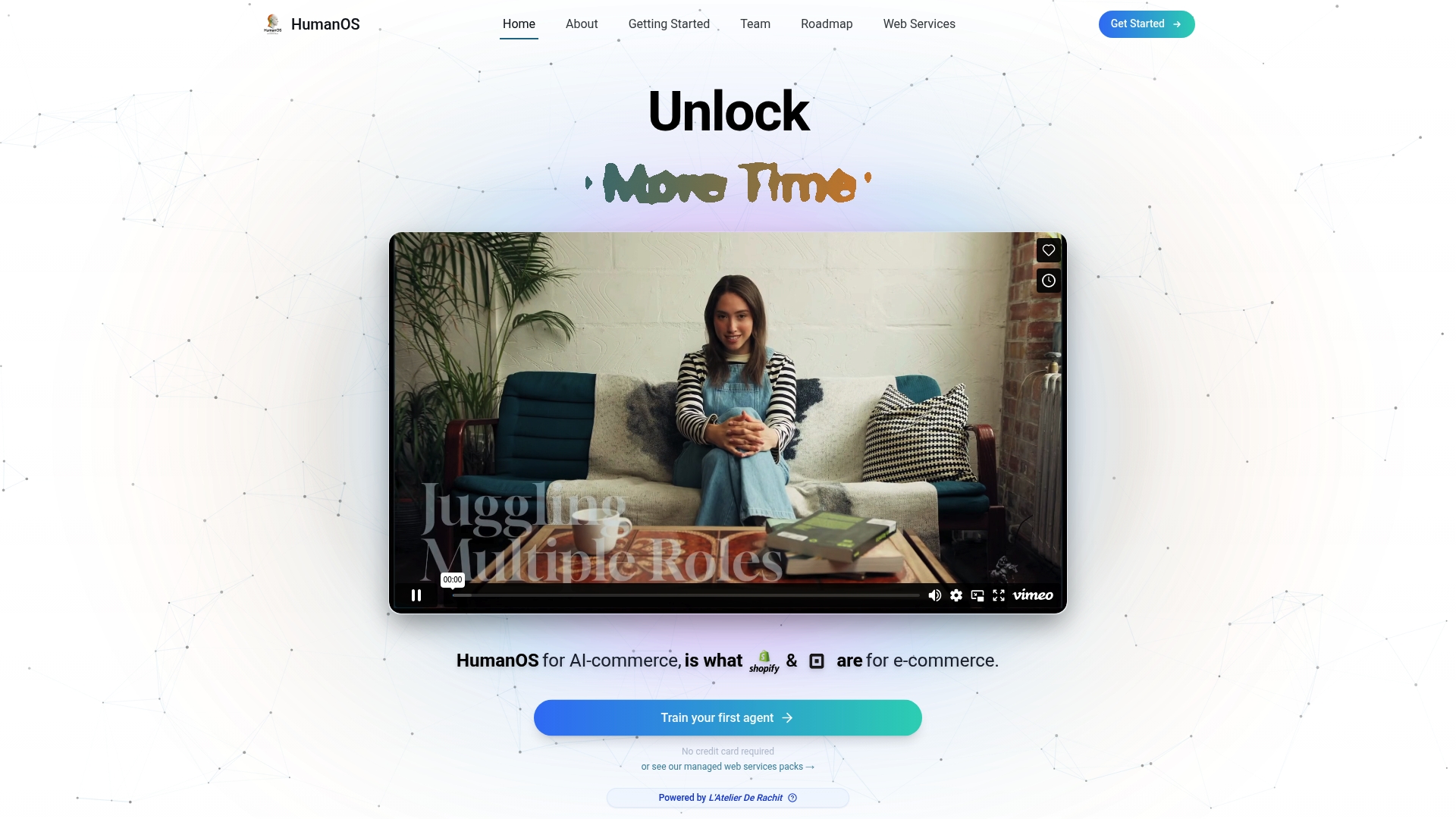
The platform connects time tracking with your existing project management, invoicing, and payroll tools through intelligent AI agents that work inside your current workflow. You get automated time entry, smart categorisation, and real-time profitability insights without requiring your team to learn another complex system. Automate with AI agents that handle routine tasks like timesheet reminders, approval workflows, and budget alerts, cutting administrative overhead by an average of 30%.
HumanOS scales with your business, whether you are a 5-person startup or a 50-person operation managing multiple projects. The system adapts to your specific needs through customisable permissions, flexible reporting, and industry-specific templates. Start with a free trial to see how AI-powered time tracking transforms your operations. Explore AI operating system web services to discover the full range of automation possibilities.
Frequently asked questions about AI-driven time tracking
How do I train employees on AI time tracking systems?
Start with hands-on demonstrations using real projects rather than abstract examples. Show employees exactly how the AI suggestions work and how they save time compared to manual entry. Most modern systems require less than 30 minutes of training because they integrate into existing workflows and provide contextual guidance.
What privacy concerns should I address when implementing activity monitoring?
Be transparent about what data you collect and how you use it. Focus monitoring on work-related applications during business hours only. Provide clear policies about personal device usage and give employees control over their privacy settings. Most concerns disappear when people understand the system helps them capture billable hours, not spy on them.
How quickly can I expect ROI from AI time tracking?
Most businesses see positive returns within 2 to 3 months through improved billing accuracy and reduced administrative overhead. Projects become 10 to 15% more profitable when you accurately allocate labour costs and spot budget issues early. The time your managers save on timesheet corrections and approvals pays for the system immediately.
Can AI time tracking work for hybrid and remote teams?
Modern AI systems excel with distributed teams because they track productivity based on actual work output rather than physical presence. Automated activity monitoring works across locations and time zones, providing consistent data whether someone works from the office or home. Real-time dashboards give managers visibility without requiring constant check-ins.
What happens if the AI categorises time incorrectly?
Quality AI systems learn from corrections and improve accuracy over time. Employees can override incorrect suggestions with a single click, and the system remembers their preferences for future entries. Most platforms achieve 95% or higher accuracy after the first few weeks as the AI learns your team's specific work patterns and project structures.
Recommended
- Business operations automation guide for SMBs in 2026
- HumanOS - AI Operating System for Humans
- AI Operating System for Humans: Automate with AI Agents
- What is a multi-agent system: A small business guide 2026
- TrainingPro vs. Spreadsheets (2026): Your Time Is Worth More Than 'Free | TrainingPro
- Metrics Should I Track For My: Complete Guide 2026