

TL;DR:
- Automate high-volume, repetitive tasks to save 15 to 60 hours weekly for SMBs.
- Use no-code tools like Zapier and Make to build scalable, AI-enhanced workflows easily.
- Continuously review, test, and refine automations to maximize ROI and prevent errors.
Choosing what to automate first is one of the most frustrating decisions a small business owner faces. The options are endless, the tools multiply every month, and a wrong move wastes both money and momentum. The good news: SMBs can save 15 to 60+ hours per week by automating the right tasks, including client onboarding, invoicing, lead follow-up, and email triage, using no-code tools that require zero technical background. This guide gives you a practical, prioritised framework for selecting workflows, choosing tools, measuring results, and avoiding the pitfalls that trip up most operators before they see real gains.
Table of Contents
- Start with the right workflows: audit, prioritise, and prepare
- Pick the best no-code tools and AI integrations
- Real-world impact: time saved, ROI, and performance benchmarks
- Avoid common automation pitfalls: testing, exceptions, and continuous improvement
- A fresh perspective: why AI-powered automation demands a smarter mindset
- Ready to automate smarter? Get started with HumanOS
- Frequently asked questions
Key Takeaways
| Point | Details |
|---|---|
| Prioritise high-impact workflows | Focus first on automating repetitive, high-volume tasks for big gains with minimal effort. |
| Use no-code AI tools | Platforms like Zapier, Make, and AI APIs let you automate without programming knowledge. |
| Benchmark results | Track time saved, cost reduction, and ROI so you measure true business value from automation. |
| Plan for error handling | Prevent costly mistakes by testing, keeping humans in the loop for critical exceptions, and reviewing regularly. |
Start with the right workflows: audit, prioritise, and prepare
Before you touch a single tool, you need a clear picture of where your time actually goes. Most business owners think they know their biggest time drains, but when they actually track a workweek, the reality surprises them. Spend three to five days logging every recurring task you or your team handles manually. You are looking for patterns: tasks done daily or weekly, tasks prone to human error, and tasks that directly affect revenue or client satisfaction.
Once you have your list, rank each workflow using a simple formula: task volume multiplied by minutes saved multiplied by error or urgency cost. This is the most reliable way to surface your highest-impact automation candidates. Prioritise workflows by volume, time, and error cost before you build anything. The goal is to focus on boosting SMB productivity through targeted, high-return automations rather than automating everything at once.
Here is a step-by-step approach to get started:
- Map your top five to ten recurring workflows such as invoices, onboarding sequences, lead follow-up, and appointment reminders.
- Audit your typical workweek by tracking time spent on each task for three to five days.
- Rank candidates using the volume x time x error cost formula.
- Fix broken processes first. Automating a chaotic workflow only produces chaos faster.
- Apply the 80/20 rule. Automate the 80% of repetitive, predictable work. Leave complex exceptions for human judgement.
- Start with one workflow. Show your team a quick win before scaling.
A critical point many owners miss: automation does not fix a broken process. If your invoicing system is inconsistent or your onboarding steps are unclear, no tool will save you. Review and clean up the process first, then automate it. You can explore AI productivity improvement steps to build a structured foundation before layering in tools.
Pro Tip: Start with just one high-impact workflow, measure the time saved over two weeks, and use that data to build internal buy-in before expanding your automation stack.
Pick the best no-code tools and AI integrations
Once your priorities are clear, the next step is selecting the tools to turn your plan into reality. The three most widely used no-code automation platforms for SMBs are Zapier, Make (formerly Integromat), and n8n. Each has a distinct strength.
| Platform | Best for | Pricing | AI integration |
|---|---|---|---|
| Zapier | Beginners, fast setup | From $19/month | Native AI steps |
| Make | Complex, multi-step logic | From $9/month | API-friendly |
| n8n | Open-source, full control | Free (self-hosted) | Highly flexible |
Zapier is the most beginner-friendly option, with a large library of pre-built templates and a clean drag-and-drop interface. Make handles more complex conditional logic and is better suited for multi-branch workflows. n8n is open-source and gives you the most flexibility, though it requires slightly more setup time.

Budget realistically. A robust no-code automation stack using Zapier or Make alongside AI APIs like Claude or ChatGPT typically costs between $30 and $150 per month. AI APIs add intelligent decision-making to your workflows, such as qualifying leads, summarising documents, or drafting personalised client emails. That is a fraction of what a part-time hire would cost for the same output.
Key features to compare when evaluating tools:
- Ease of use: Can a non-technical team member manage it?
- Workflow library: Are there templates for your industry?
- Support quality: Is help available when something breaks?
- AI integration: Can you connect to Claude, ChatGPT, or other models?
- Scalability: Will it grow with your business?
Integrated platforms that bundle multiple functions tend to reduce maintenance overhead over time. Rather than managing five separate tools, a single platform with connected modules is easier to troubleshoot and update. If you want a curated comparison, explore AI tools for SMBs that are already vetted for non-technical operators. You can also automate business tasks with guided resources that walk you through tool selection step by step.
Pro Tip: Always start with a free trial and look for SMB-specific templates. Testing before committing saves you from paying for a tool that does not fit your actual workflows.
Real-world impact: time saved, ROI, and performance benchmarks
But what can you realistically expect from automation? Here is what the numbers and real SMBs reveal.
Case studies show 20 to 450 hours saved per week and ROI improvements of 25 to 50% across industries ranging from agencies to ecommerce. Those are not outliers. They reflect what happens when the right workflows are automated with the right tools.
| Business type | Hours saved per week | ROI improvement | Key workflow automated |
|---|---|---|---|
| Marketing agency | 40 hours | 45% | Reporting and client updates |
| Ecommerce store | 112 hours | 30% | Order processing and follow-up |
| Small consultancy | 20 hours | 25% | Lead qualification and onboarding |
Operational costs can drop 10 to 40% within six months when automation is applied consistently to high-volume, error-prone tasks. Businesses that automate lead follow-up alone often report two to three times more leads converted, simply because responses happen instantly rather than hours later.
"We reduced manual work by 73%. Our staff went from stressed to strategic."
That shift, from reactive to strategic, is the real value. When your team stops spending hours on data entry and email sorting, they redirect that energy toward client relationships and growth activities. Explore how AI SMB growth gains translate into measurable business outcomes beyond just time savings.
These benchmarks are also useful internally. When you need to justify automation investment to a business partner or team member, concrete numbers carry far more weight than general claims about efficiency.
Avoid common automation pitfalls: testing, exceptions, and continuous improvement
Reliable automation means understanding not just the benefits, but also how to avoid costly mistakes.
"Automating a bad process just makes your mistakes faster. Take time to fix it first."
This is the most important rule in automation. Before any workflow goes live, test it thoroughly with edge cases. What happens if a form is submitted with missing fields? What if a payment fails mid-sequence? AI tools can error on exceptions, so keeping humans in the loop for high-stakes decisions is essential.
Here is a reliable pre-launch checklist for every workflow:
- Run edge case tests with incomplete, incorrect, or unusual inputs.
- Add input validation so the workflow rejects bad data before it causes downstream errors.
- Set up error notifications so you know immediately when something breaks.
- Build retry and rollback logic for critical steps like payments or data writes.
- Add human checkpoints for any decision with significant financial or client impact.
- Document the workflow so any team member can troubleshoot it.
Continuous improvement matters just as much as the initial build. Workflows that worked perfectly six months ago may break when a connected app updates its interface or when your business process changes. Schedule monthly reviews to catch silent failures before they affect clients or revenue.
You can build a stronger foundation by reviewing AI productivity strategies that include governance and review cycles. For deeper technical guidance, workflow design best practices cover how to structure automations for long-term reliability.
Pro Tip: Create a simple monthly review checklist with five questions: Is the workflow still running? Are error rates acceptable? Has the connected app changed? Is the output still accurate? Does it still match the current business process?
A fresh perspective: why AI-powered automation demands a smarter mindset
Most businesses approach automation as a one-time project. Build it, launch it, forget it. That mindset is exactly why so many automations quietly break or deliver diminishing returns within a year.
The operators who get the greatest gains treat automation as an ongoing practice, not a completed task. They review performance, adjust logic, and stay curious about where AI can add a layer of intelligence on top of rule-based steps. Think of it as a strategic automation ROI mindset rather than a cost-cutting exercise.
AI brings genuine adaptability to automation. Unlike rigid rule-based systems, AI agents can handle variation, summarise context, and make probabilistic decisions. But that adaptability only compounds when you stay engaged as the co-pilot. You set the direction, review the outputs, and refine the logic. The system handles the volume. That partnership, not passive delegation, is what separates businesses that scale with AI from those that simply install it and wonder why nothing changed.
Blending rule-based and AI-driven tasks within the same workflow is often the most powerful approach. Let rules handle the predictable steps. Let AI handle the nuanced ones. Stay involved in both.
Ready to automate smarter? Get started with HumanOS
If you are ready to put these automation tips into action, here is where to start.
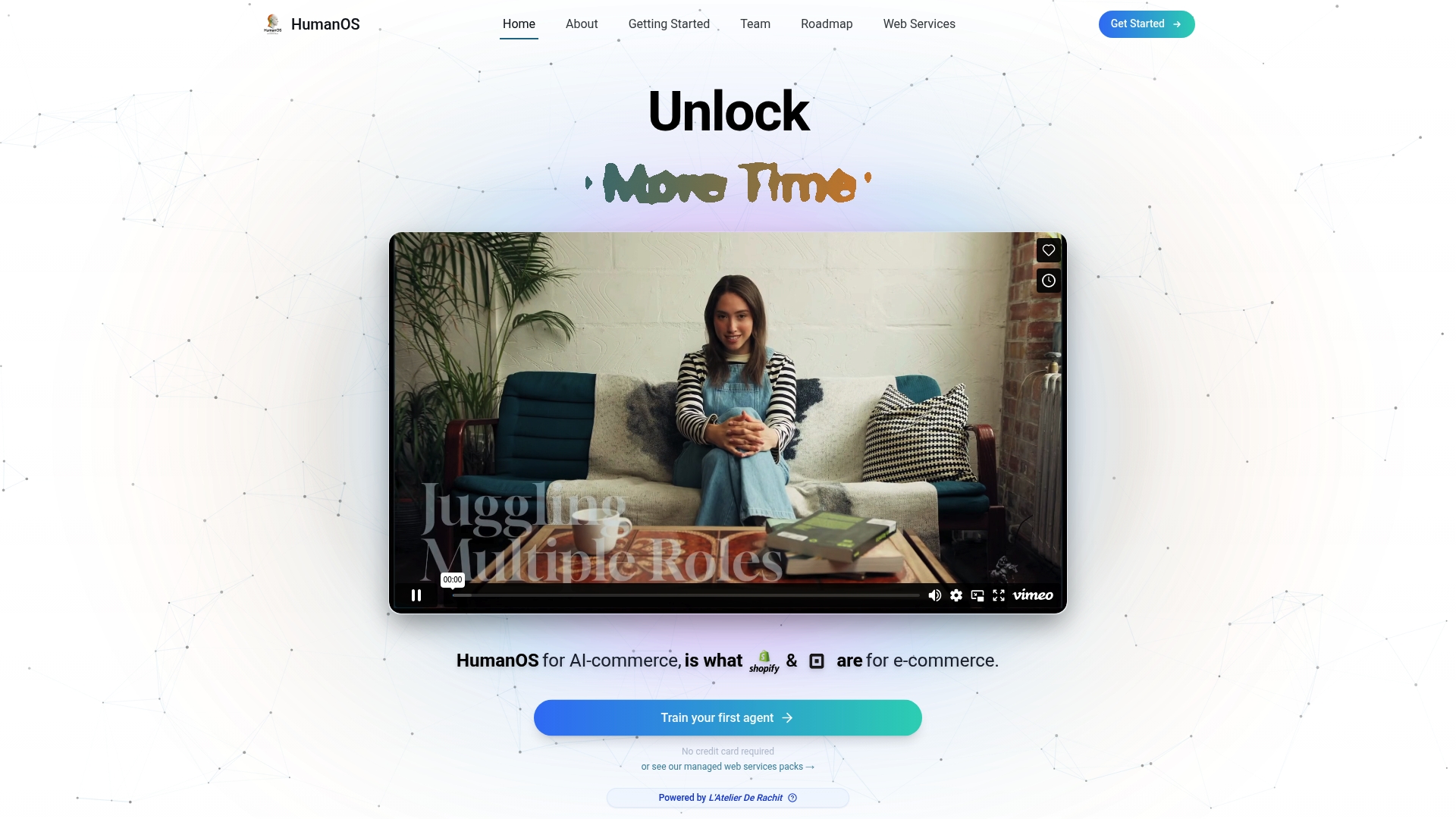
HumanOS is built specifically for non-technical SMB operators who want measurable results without months of setup or a developer on speed dial. The platform's AI agents handle email management, scheduling, document processing, customer support, and more through a self-guided onboarding system that requires no coding and no credit card to start. Even a single automated workflow can free up dozens of hours each month. Explore the full AI Operating System to see which agents fit your business today, or browse web services for AI automation if your digital infrastructure needs a stronger foundation first.
Frequently asked questions
Which business tasks are best automated first?
Start with high-volume, repetitive tasks like invoicing, lead follow-up, and client onboarding for the biggest time savings. SMBs save 15 to 60+ hours weekly by targeting these workflows first.
How do I calculate ROI when automating workflows?
Track hours saved, reduced errors, and the dollar value of time to see your ROI improve 25 to 50% within months. Case studies confirm these gains are achievable for businesses of all sizes.
Do I need coding skills to use AI automation tools?
No coding is needed for most SMB automation. No-code platforms like Zapier, Make, and n8n include AI features that any operator can configure without technical expertise.
How do I prevent mistakes when automating important business processes?
Test workflows with edge cases, add human checkpoints for high-stakes decisions, and review automations monthly. Thorough pre-launch testing is the single most effective way to prevent costly automation errors.