

TL;DR:
- AI boosts SMB productivity by over 20% with potential revenue growth for early adopters.
- Focus on high-impact, low-risk AI use cases like automation, chatbots, and content generation.
- Successful AI integration requires deliberate change management, measurement, and ongoing adaptation.
Running a small or mid-sized business in 2026 means competing against leaner, faster, and increasingly AI-enabled rivals. Tight budgets, limited staff, and endless administrative drag make operational efficiency not just a goal but a survival imperative. The good news: SMBs using AI report productivity boosts exceeding 20%, with 40% seeing measurable revenue growth. This article walks you through a stepwise approach to selecting, comparing, and implementing AI-driven productivity improvement strategies that actually move the needle. Whether you are just exploring automation or ready to scale, you will leave with a clear, actionable framework built for real SMB constraints.
Table of Contents
- Establishing the criteria: What matters for effective productivity strategies
- Top AI-driven productivity strategies for SMBs
- Comparing strategies: Impact, risk and suitability
- From pilot to practice: Ensuring successful integration
- Why most SMBs get productivity wrong: Start small, adapt fast
- Turn productivity insights into action with the right AI platform
- Frequently asked questions
Key Takeaways
| Point | Details |
|---|---|
| Start with bottlenecks | Tackle your business’s most repetitive and easily automated tasks first for quickest productivity gains. |
| Pilot and measure results | Use clear metrics like time saved and ROI during 30/60/90-day pilots to determine what strategies truly deliver value. |
| Iterate for scale | Learning from real-world pilots and adjusting fast leads to better integration and long-term gains for SMBs. |
| Prioritise governance | Establish oversight and address risks such as privacy and bias to ensure safe, lasting productivity improvements. |
Establishing the criteria: What matters for effective productivity strategies
With the landscape set, let's clarify what actually matters when evaluating productivity improvement options. Not every AI tool deserves a spot in your workflow. Before you invest time or money, you need a clear picture of what productivity actually means for your specific business context. Is it hours saved on repetitive admin? Cost avoidance by reducing errors? Or unlocking new revenue by freeing your team to focus on higher-value work? Defining this upfront keeps you from chasing shiny tools that solve the wrong problems.
A useful stepwise AI productivity guide starts by mapping your existing bottlenecks. Look for tasks that are high-volume, rule-based, and time-consuming. These are your highest "automation potential" targets. Think invoice processing, appointment scheduling, customer query responses, and first-draft content creation. These are areas where AI delivers fast, measurable wins with relatively low disruption.
Before committing, assess your team's readiness. Do your people have the basic digital literacy to work alongside AI tools? Are your workflows documented well enough to hand off to automation? These questions matter more than the tool itself. AI adoption rates for SMBs remain surprisingly low, which means the competitive advantage for early movers is still very real.
Also, be honest about risk. AI automation risks include data privacy vulnerabilities, algorithmic bias, and over-dependence on systems that can hallucinate or fail. These are not reasons to avoid AI, but they are reasons to plan carefully.
Key criteria to evaluate before adopting any AI productivity strategy:
- Time savings potential: How many hours per week does this task consume?
- Error rate reduction: Is human error currently costing you money or reputation?
- Integration complexity: Does the tool connect with your existing systems?
- Data sensitivity: What information will the AI touch, and how is it protected?
- Measurable outcomes: Can you track ROI within 30 to 90 days?
Pro Tip: Focus your first AI investment on the single biggest bottleneck in your operation. One well-chosen automation that saves five hours a week is worth more than five half-implemented tools that save nothing.
Top AI-driven productivity strategies for SMBs
Now that you know what to look for, let's dig into the practical, high-leverage strategies you can implement right now. The following approaches are proven, accessible, and suited to SMB realities. You do not need a dedicated IT team or a six-figure budget to start seeing results. For more context on improving team productivity with AI, the fundamentals remain consistent: start focused, measure everything, and expand from there.
AI for small business experts consistently recommend beginning with high-impact, low-risk use cases. Here are the top five strategies ranked by accessibility and ROI potential:
-
Workflow and administrative automation: Tools like Zapier and Make connect your apps and automate repetitive handoffs. Think automatic lead routing, invoice generation, and data entry. This is the easiest entry point for most SMBs.
-
AI-powered customer support chatbots: ChatGPT-powered bots handle common queries around the clock without adding headcount. They reduce response time, improve customer satisfaction, and free your team for complex issues.
-
AI content generation and editing: Platforms like Notion AI and Jasper accelerate first-draft creation for blogs, emails, and social posts. Your team still adds the strategy and voice, but the heavy lifting is automated.
-
AI scheduling and calendar management: Intelligent calendar assistants eliminate the back-and-forth of booking meetings, optimise time blocks, and reduce no-shows through automated reminders.
-
AI-assisted data analysis and reporting: Instead of spending hours in spreadsheets, AI tools surface trends, flag anomalies, and generate plain-language summaries your whole team can act on.
For a deeper look at SMB AI automation tips and productivity tools saving hours every week, the evidence is compelling. Empirical research confirms these strategies drive real gains when implemented with intention.

Pro Tip: Pilot one strategy in a single department for 30 to 90 days. Track hours saved, errors reduced, and team sentiment before rolling out more broadly. This builds confidence and gives you real data to justify further investment.
Comparing strategies: Impact, risk and suitability
You have several candidate strategies. Here is how they stack up against each other in an SMB environment. Not all AI productivity tools perform equally across departments, budgets, or risk tolerance levels. A chatbot that works brilliantly in customer service might be completely irrelevant for your operations team. Context is everything.
Empirical studies confirm AI speeds text-heavy tasks significantly, with productivity gains exceeding 20% in well-integrated environments. Yet the OECD AI adoption data reveals only 11.9% of SMEs have adopted AI, compared to 40% of large firms. That gap is your opportunity.
For a full picture, consult the business automation guide and time tracking strategies to understand where each tool fits best. Also review AI integration challenges that commonly derail SMB rollouts.
| Strategy | Impact | Risk level | Cost to start | Skills required |
|---|---|---|---|---|
| Workflow automation | High | Low to medium | Low | Basic digital literacy |
| Customer support chatbots | High | Low | Low to medium | Minimal setup |
| Content generation | Medium | Low | Low | Editing judgement |
| AI scheduling | Medium | Very low | Low | None |
| Data analysis and reporting | High | Medium | Medium | Data familiarity |
Key takeaways from this comparison:
- Chatbots offer the best risk-to-reward ratio for customer-facing teams with high query volumes.
- Workflow automation delivers the broadest impact but requires some upfront integration effort.
- Content generation is the fastest to deploy but needs human oversight to maintain quality and brand voice.
- Data analysis tools have the highest skill floor but deliver outsised strategic value once embedded.
The smartest move is to match the strategy to your current capacity, not your aspirational capacity. Start where you are strongest, not where you think you should be.
From pilot to practice: Ensuring successful integration
Once you have chosen your strategy, here is how to move from pilot project to sustainable operational improvement. The gap between a promising pilot and a lasting productivity gain is wider than most SMB owners expect. The tools are rarely the problem. The people, processes, and measurement systems around them usually are.
Fewer than 20% of SMBs integrate AI solutions well, despite 80% reporting productivity benefits. That disconnect points to a change management problem, not a technology problem. Closing that gap requires deliberate structure.
Start by assigning an internal champion: someone who owns the rollout, collects feedback, and escalates issues. Without accountability, even great tools get abandoned. Then standardise how you report results. Track hours saved, error rates, customer satisfaction scores, and employee sentiment on a consistent cadence.
Piloting in one department and measuring ROI via time saved and cost avoided gives you the proof points to expand confidently. Use the following metrics table to structure your measurement approach:
| Metric | What it measures | Review frequency |
|---|---|---|
| Hours saved per week | Direct time recaptured | Weekly |
| Error rate reduction | Quality and accuracy improvement | Bi-weekly |
| Employee satisfaction score | Team adoption and morale | Monthly |
| Customer response time | Service quality impact | Weekly |
| Revenue influenced | Business growth contribution | Monthly |
For practical efficiency tips with AI and AI scheduling strategies, the pattern is consistent: measure early, adjust often, and communicate wins to your team.
Also address the human side directly. Upskill your team with short, focused training sessions. Recognise early adopters. Be transparent about what AI is doing and why. Change fatigue is real, and ignoring it is one of the fastest ways to kill a promising initiative. Check AI impact on SMB integration for real-world examples of what works.
Pro Tip: Build a 30/60/90-day plan before you launch. At 30 days, assess adoption. At 60 days, measure ROI. At 90 days, decide whether to expand, refine, or pivot. This rhythm keeps momentum without locking you into a failing approach.
Why most SMBs get productivity wrong: Start small, adapt fast
Pulling these lessons together, here is what the research and real experience reveal about achieving lasting productivity gains. Most SMBs do not fail at AI because the technology is too complex. They fail because they over-plan, under-execute, and then declare the whole thing a disappointment after one rough quarter.
The instinct to build a grand strategy before touching a single tool is understandable. But it is also expensive. Every week spent in planning meetings is a week your competitors are collecting real data from real pilots. Fast feedback from a live deployment is worth more than any theoretical framework.
AI efficiency is also a moving target. What delivered strong results last year may need refinement as tools evolve and your business changes. The SMBs winning right now are the ones treating AI adoption as an ongoing practise, not a one-time project.
Governance is the most overlooked factor. Prioritising workflow redesign and pilots over grand strategies, while building governance frameworks for risks, is what separates durable gains from short-lived experiments. Who reviews AI outputs? Who owns the data? What happens when the system makes a mistake? These questions need answers before you scale.
The stepwise AI improvement guide approach works because it forces you to build on verified wins rather than assumptions. Start small, prove value, expand deliberately, and course-correct without ego. That is how real productivity transformation happens.
Turn productivity insights into action with the right AI platform
Ready to put these productivity strategies into action? The right platform can make all the difference. Understanding the strategies is one thing. Having the infrastructure to execute them without duct-taping five different tools together is another.
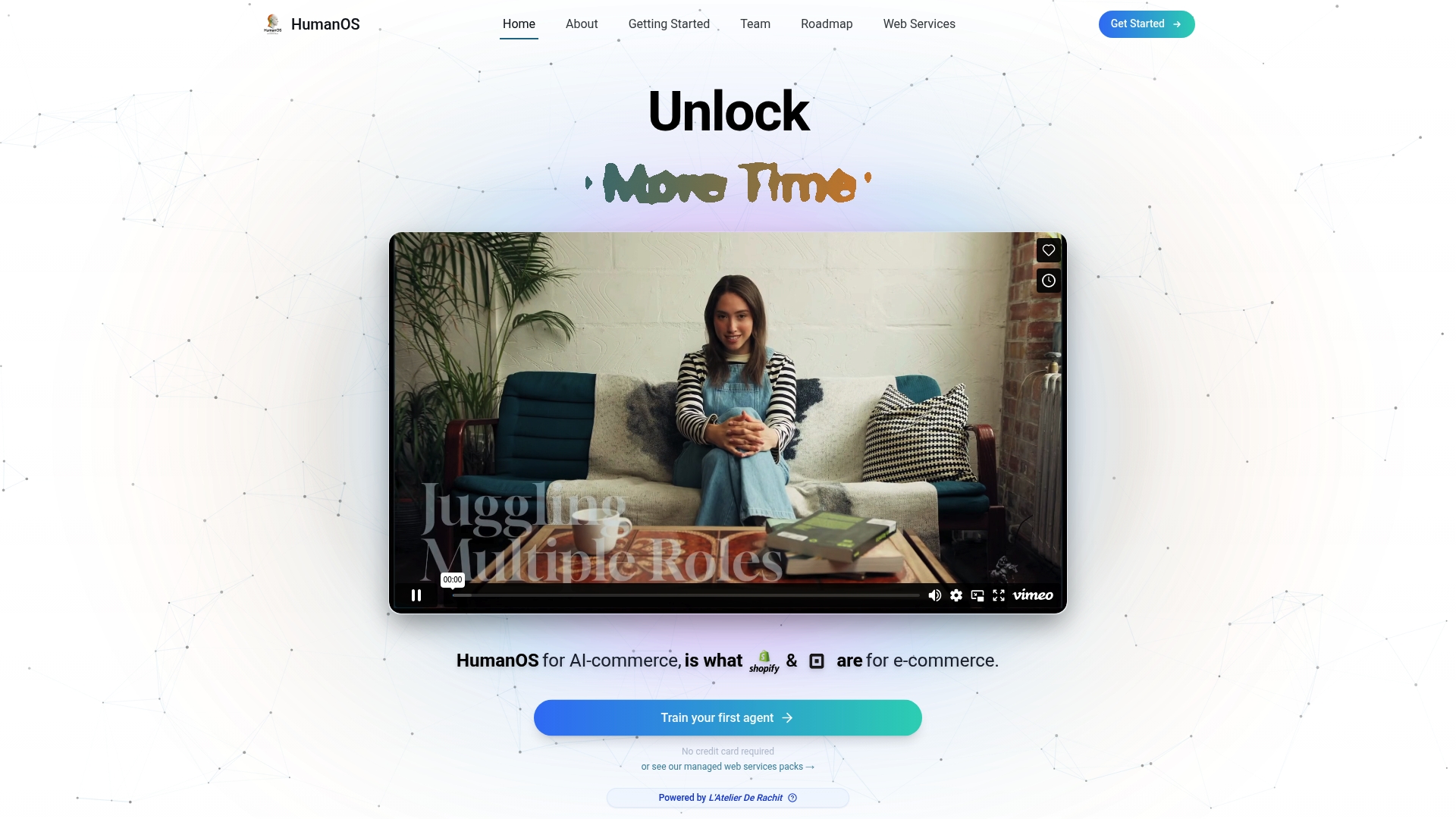
HumanOS is built specifically for SMBs that are done guessing. Our AI agents automate email management, scheduling, document processing, customer support, data analysis, content creation, and time tracking through a self-guided onboarding system that requires no coding and no credit card to start. On average, our clients see an 80% boost in productivity and a 30 to 50% boost in profitability. Explore AI automation for your business or visit the full AI operating system solutions platform to start your free trial today.
Frequently asked questions
What is the fastest way for small businesses to see productivity gains with AI?
Start with high-impact, low-risk use cases like workflow automation or content generation, then track time saved over 30 to 90 days. Automating your most repetitive, text-heavy tasks delivers the fastest measurable return.
Do most SMBs see real ROI from AI productivity tools?
Yes. SMBs using AI report productivity boosts exceeding 20%, with 40% seeing significant revenue growth. The key is intentional integration, not just tool adoption.
What is the main barrier to AI adoption in SMBs?
The greatest challenge is successful integration across business processes. Fewer than 20% of SMBs integrate AI well despite the majority reporting benefits, pointing to a change management gap rather than a technology gap.
What risks should SMBs watch for with AI-driven automation?
Risks include data privacy vulnerabilities, algorithmic bias, and governance gaps. Ensure clear human oversight is in place before scaling any automated process.
How can SMBs measure the impact of AI productivity strategies?
Measure ROI by tracking hours saved, errors reduced, employee satisfaction, and revenue changes as part of a structured pilot programme. Consistent measurement is what turns a promising experiment into a proven system.