

TL;DR:
- Automation is increasingly vital for small and mid-sized businesses to scale efficiently, but it requires careful planning.
- A clear framework includes defining specific goals, validating data sources, and piloting processes before scaling to prevent failures.
Automation is no longer a luxury reserved for enterprise teams with six-figure IT budgets. For small and mid-sized businesses, it is quickly becoming the difference between scaling confidently and spinning your wheels. But here is the real challenge: most SMEs jump into automation with good intentions and end up with a patchwork of half-working tools, inconsistent data, and frustrated staff. The risk is real, and the cost of a failed pilot is more than just time. This guide breaks down the specific, domain-aware steps you need for customer support, data management, and web service automation, so you can move forward with clarity instead of guesswork.
Table of Contents
- How to start: The cross-domain automation readiness checklist
- Customer support automation: Step-by-step checklist and benchmarks
- Data management automation: Clean data, continuous audits, and error prevention
- Web services and API automation: Security, reliability, and best practices checklist
- SME automation checklist comparison at a glance
- The uncomfortable truth about SME automation checklists
- Take your SME automation further with HumanOS
- Frequently asked questions
Key Takeaways
| Point | Details |
|---|---|
| Start with outcomes | Focus automation efforts on one measurable business outcome before expanding further. |
| Map rule-based vs. judgement steps | Automate explicit, rule-based tasks but always keep people in the loop for judgement-heavy work. |
| Audit and monitor continuously | Baseline your data and processes with an audit and set up ongoing monitoring to avoid silent errors. |
| Prioritise security and reliability | For web and API automation, protect credentials, handle limits, and design for predictable failures. |
| Always pilot before scaling | Run small pilots, measure real business KPIs, and expand automation only after proving success. |
How to start: The cross-domain automation readiness checklist
Before you touch a single workflow, you need a foundation. Automation without structure is just organised chaos. The good news is that the same five-step readiness framework applies whether you are automating a support queue, a data pipeline, or an API integration.
Here is the master checklist every SME should run through before piloting anything:
- Choose one measurable business outcome. Vague goals like "improve efficiency" are not enough. Pick something you can actually track, such as reducing first-response time by 40% or cutting manual data entry by half.
- Separate rule-based tasks from judgement-based tasks. Automation excels at repetitive, predictable actions. It struggles with nuance, emotion, and edge cases. Map your processes honestly before you commit.
- Validate your data sources and access rules. If the data feeding your automation is incomplete, duplicated, or restricted, the automation will fail silently or produce wrong outputs. Fix this first.
- Instrument metrics and monitoring from day one. You cannot improve what you do not measure. Set up dashboards or alerts before the pilot goes live, not after something breaks.
- Pilot before you scale. As the AI Readiness Checklist for SMBs advises, "start automation by picking one measurable business outcome, validating your data sources and access rules, and running a short pilot before scaling." This principle holds across every domain.
"Treat your pilot as an experiment, not a deployment. Define what success looks like before you start, and be willing to shut it down if the metrics do not move."
Pro Tip: Run your pilot for 30 to 60 days with no more than two or three crisp success metrics. Longer pilots without clear targets drift into permanent beta status, and nobody improves that way.
One of the most common missteps we see is when businesses automate a process that was never clearly defined to begin with. If your team cannot describe the exact steps in a workflow, automation will not fix it. It will just execute the chaos faster. Reviewing your workflow automation tips before building anything out can save you weeks of rework. For a broader roadmap, the automation guide for SMBs is a strong companion resource to keep within reach.
Customer support automation: Step-by-step checklist and benchmarks
Customer support is where automation can deliver the fastest, most visible wins. It is also where a careless rollout can damage your brand overnight. Getting the sequencing right matters enormously here.
Follow this checklist to set up customer support automation the right way:
- Define your triage and routing logic. Categorise incoming requests by topic, urgency, and channel before anything is automated. Without this, your bot routes the wrong tickets and frustrates customers before a human ever gets involved.
- Set up auto-acknowledgement for every inbound request. Customers do not expect instant resolution. They do expect to know their message was received. Automated acknowledgements reduce anxiety and keep CSAT (Customer Satisfaction Score) stable.
- Map queues to teams explicitly. Billing questions go to billing. Technical issues go to support. Do not let automation guess. Explicit mapping prevents tickets from falling into the void.
- Build escalation rules before you launch. Every automation needs a clear handover path to a human agent. As the AI Automation Small Business Checklist confirms, structured workflows work best when humans remain in the loop for judgement-heavy or risk-sensitive cases.
Here is a practical benchmark table to guide your expectations as your support automation matures:
| Metric | Initial target (pilot phase) | Mature target (6+ months) |
|---|---|---|
| Automated resolution rate | 20–30% | 50–65% |
| Human handover rate | 70–80% | 35–50% |
| Average first-response time | Under 5 minutes | Under 2 minutes |
| CSAT score change | Stable (no drop) | +5 to +10 points |
These benchmarks for deflection and handover rates are drawn from SMB-focused vendor data, but treat them as directional targets. Always validate against your own baseline before declaring success.
Pro Tip: Never rely solely on resolution rates to measure support automation health. Monitor CSAT weekly during the first three months. A drop in satisfaction is often the first sign of a silent automation failure, well before your ticket volume or cost metrics show anything unusual.
For practical inspiration on where to start, reviewing proven support automation ideas can give you concrete starting points rather than abstract frameworks.
Data management automation: Clean data, continuous audits, and error prevention
Bad data is the silent killer of automation programmes. You can have the best workflow design in the world, and if the underlying data is messy, your automation will produce confident-looking wrong answers. This is not a hypothetical risk. It is the single most common reason data automation projects underperform.
Here is a field-tested sequence for automating data management responsibly:
- Audit your data before you automate anything. The CRM Data Audit Checklist strongly recommends establishing a quantified baseline via a full CRM data audit before cleaning or automating any pipelines. Know exactly what you are working with.
- Prioritise the highest-impact data issues first. Not every data problem is worth fixing immediately. Focus on the fields and records that directly feed your automation workflows.
- Fix root causes, not just symptoms. If duplicate contacts keep appearing, find out why the duplicates are being created. Cleaning the database once and ignoring the source of the problem just means you will be cleaning it again in three months.
- Automate the clean-up processes once root causes are addressed. Only at this stage should you introduce automated deduplication, formatting rules, or data enrichment tools.
- Schedule re-audits on a fixed cadence. The same source recommends that periodic re-audits such as quarterly reviews prevent recurring issues from snowballing into data disasters.
"Audit then automate" is not just a best practice. It is a baseline requirement. Skipping the audit phase is how businesses end up automating their mistakes at scale.
Pro Tip: Even a lightweight quarterly audit, which might take just two or three hours, can catch drift in data quality before it corrupts reports, triggers wrong automations, or misleads your team. Mark it in the calendar the same way you would a financial review.
Validation and sampling are your two best defences against silent data errors. When you run automated pipelines, periodically sample a batch of outputs and manually verify them. Automation propagating bad or malformed data silently through your system is far worse than catching an error early. If you want to understand how the effort here connects to revenue impact, the research on content automation ROI shows just how compounding clean-data practices can be over time.

Web services and API automation: Security, reliability, and best practices checklist
Connecting your business to external platforms through APIs (Application Programming Interfaces, meaning structured ways for software systems to talk to each other) adds enormous capability. It also introduces new categories of risk. Security breaches, rate limit failures, and unreliable integrations can take down business-critical workflows with no warning.
Use this checklist before any API or web service automation goes live:
- Secure your credentials properly. Never hard-code API keys in your application code. Use environment variables or a secrets manager. A single exposed key can compromise your entire integration.
- Handle rate limits explicitly. APIs limit how many requests you can make in a given time window. Build your automation to detect and respect those limits. As API Security Checklist guidance highlights, you should also plan for multi-dimensional rate limits by key, tenant, and route, not just a single global cap.
- Implement idempotency. This means designing your automation so that running the same request twice does not create duplicate records or double-charge customers. This is non-negotiable for payment and order workflows.
- Build reliable retry logic. Transient failures happen. Your automation should automatically retry failed requests with a sensible delay, not crash and send your team a panic-inducing alert at midnight.
- Handle errors explicitly and predictably. Every integration needs a clear fallback for when something goes wrong. Silent failures are worse than visible ones because nobody knows to fix them.
| Feature | Basic automation | Fully featured automation |
|---|---|---|
| Credential management | Hard-coded or shared keys | Secrets manager, rotating keys |
| Rate limit handling | None or manual | Automated backoff, retry queues |
| Error handling | Generic catch-all | Explicit error types, alerting |
| Idempotency | Not implemented | Built in at the request level |
| Monitoring | None | Real-time dashboards, alerts |
The API Integration Best Practices framework confirms that security and reliability must be handled explicitly from the start, not retrofitted after an incident.
Pro Tip: Always validate API responses, not just status codes. A 200 OK response can still contain malformed or empty data that breaks downstream processes. Build response validation into every integration step.
For a broader look at what well-structured automation can deliver to your bottom line, the data on strategic automation ROI is worth reviewing before scoping your integration projects.
SME automation checklist comparison at a glance
Now that you have worked through each domain, here is a practical side-by-side reference to help you prioritise your next move.
| Checklist area | Customer support | Data management | Web services / APIs |
|---|---|---|---|
| Readiness and pilot | Define triage and routing | Audit data before automating | Validate credentials and access |
| Monitoring | Track CSAT and resolution rates | Sample outputs regularly | Monitor responses and error rates |
| Human handover | Escalation rules required | Manual review for anomalies | Human alert for integration failures |
| Error management | Escalation path for all cases | Fix root causes before automation | Explicit error handling and retries |
| Audit cadence | Monthly CSAT review | Quarterly data re-audit | Ongoing response validation |
| Security | Data privacy and routing rules | Access controls on CRM data | Credential management and rate limits |
Use this table alongside the operational efficiency checklist to map your current state against the target.
When deciding where to prioritise, consider these signals:
- Start with customer support automation if you have a high inbound volume and your team is spending more than 40% of their time on repetitive, identical queries.
- Start with data management automation if your reporting is unreliable, your CRM is full of duplicates, or decisions are being made on data nobody fully trusts.
- Start with web services and API automation if your team is manually copying data between platforms or you have critical integrations that go down without warning.
The quickest wins almost always live where measurable outcomes are most achievable and data quality is already reasonably solid. Start there.
The uncomfortable truth about SME automation checklists
Here is something most guides will not say directly: the checklist is not the hard part. Following it is.
In our experience working with SMEs across diverse industries, the most common automation failure is not a technology problem. It is a discipline problem. Businesses run a 30-day pilot, see promising early results, declare victory, and then stop measuring. Six months later, customer satisfaction has quietly eroded, data quality has drifted, and nobody connected the dots back to the automation that stopped being monitored.
The most dangerous automation failure mode is the one you cannot see. When something breaks loudly, your team fixes it. When CSAT drops silently while ticket volume holds steady, nobody raises an alarm. This is what a silent failure looks like: the indicators that matter most are moving in the wrong direction, but the surface metrics look fine. By the time anyone notices, you have months of compounding damage to reverse.
Another hard truth: automation has a tendency to amplify whatever was already happening. If your support process was disorganised before you automated it, the automation will serve disorganisation at scale. If your data was inconsistent, your automated reports will be confidently wrong. No tool fixes a broken process. The process has to come first.
We would also caution against over-automating emotionally charged interactions. Billing disputes, complaints from long-term clients, and sensitive escalations should almost always involve a human. The checklist has to include explicit criteria for when automation steps back, not just when it steps in. Reviewing productivity tips with AI can help you find the right balance between what to automate and what to protect.
Pro Tip: Schedule a quarterly automation review the same way you schedule financial reporting. Look specifically for silent failure paths: metrics that have shifted quietly since the last review. Teams and processes evolve, and automations that worked well six months ago may be misaligned with your current reality.
The right mindset is not "set it and forget it." It is "set it, measure it, and revisit it on a schedule."
Take your SME automation further with HumanOS
You now have the checklists, benchmarks, and frameworks to move forward with confidence. But knowing what to do and having the infrastructure to do it consistently are two very different things.
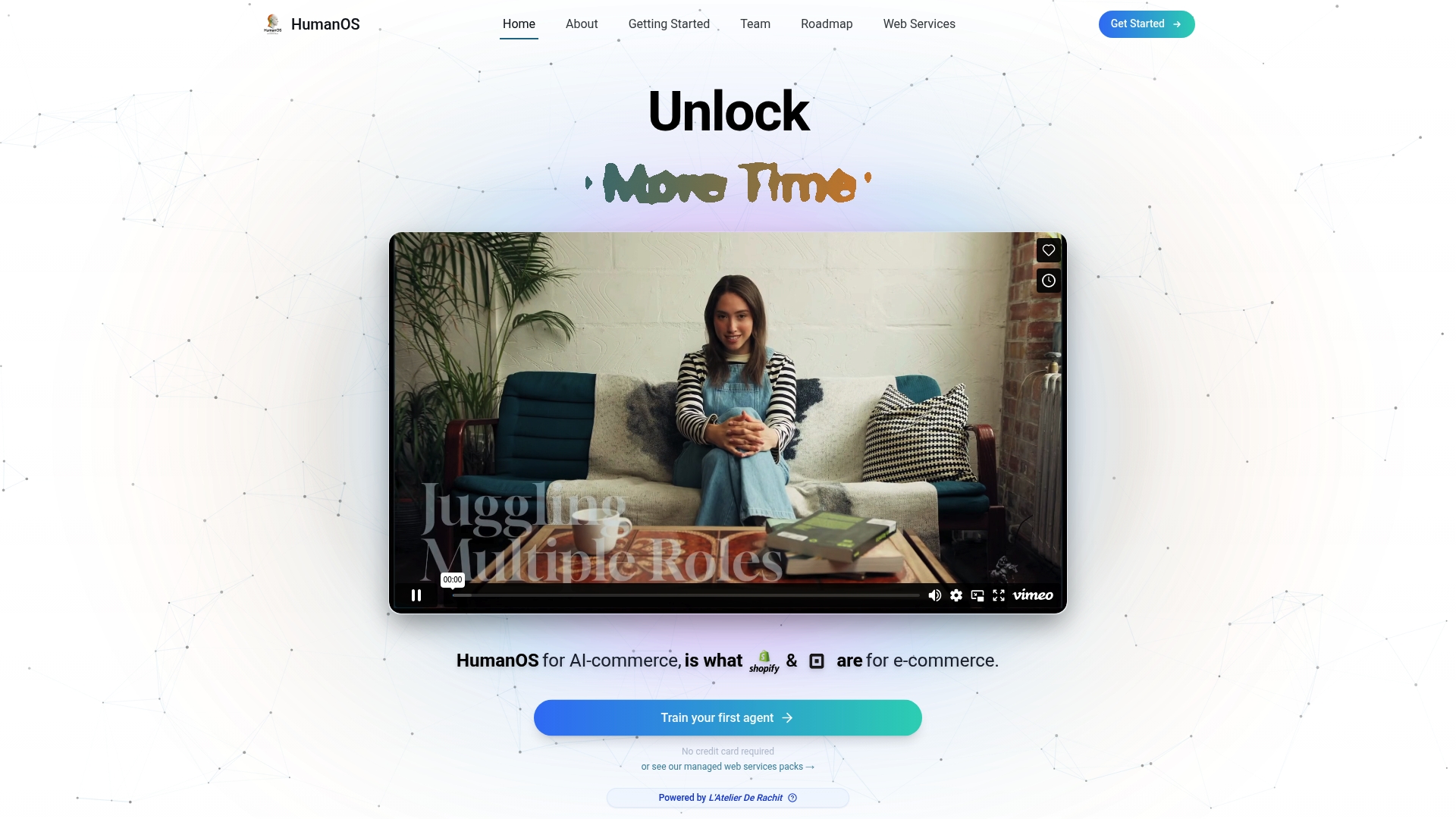
HumanOS is built exactly for this moment in your business. Our AI automation platform brings together AI agents for customer support, data management, content, scheduling, and more, deployed through a self-guided onboarding system that requires no coding and no credit card to start. Every agent is built on our proprietary MCP-powered architecture, meaning your automations stay explainable, governed, and embedded inside your existing workflows. If your business also needs a web presence that converts, explore how we automate web services through fully managed WordPress solutions at a fraction of typical agency costs. Visit the HumanOS overview to start your 3-day free trial today.
Frequently asked questions
What is the first step in creating an automation checklist for SMEs?
Start by choosing one measurable business outcome you want to automate and defining how success will be measured before piloting. AI Readiness Checklist for SMBs guidance confirms this is the single most important starting point.
How can SMEs avoid automating the wrong processes?
Map out which tasks are rule-based (suitable for automation) and which require human judgement, and always validate with a pilot first. Structured workflows work best when this distinction is made explicit before any tool is deployed.
How often should SMEs re-audit their data after automating?
Re-audit data on a fixed cadence, such as quarterly, to catch and prevent recurring issues before they compound. The CRM Data Audit Checklist recommends periodic re-audits as a standard requirement, not an optional extra.
What are the most important benchmarks for customer support automation?
Track automated resolution rates, handover rates to humans, and changes in customer satisfaction as your key metrics. Practical initial and mature targets exist for SMBs, but always validate them against your own baseline before setting expectations.
What security issues must SMEs address in API automation?
Ensure credential security, rate limiting, and robust error handling to protect against abuse and downtime. Security and reliability must be built in from the start, not patched in after an incident forces your hand.