

TL;DR:
- Automating routine tasks saves up to 30% of time and reduces human errors.
- Workflow automation enhances productivity, collaboration, and scalability for small businesses.
- It improves customer experience through faster responses and personalized communication.
Manual processes are quietly stealing your most valuable resource: time. If your team still handles invoice approvals by hand, copies data between spreadsheets, or waits on email chains for simple task sign-offs, you are not alone. Most small and mid-sized business owners are burning hours every week on work that a well-configured automated workflow could handle in seconds. Automated workflows reduce process time and human error, freeing your people to focus on what actually grows the business. This article breaks down the five most impactful advantages of workflow automation so you can make a clear, confident decision about where to start.
Table of Contents
- Save time and reduce manual errors
- Enhance productivity and team collaboration
- Increase scalability and business growth
- Deliver better customer experiences
- Drive smarter decisions with real-time data
- Why most SMBs underestimate workflow automation
- Start unlocking automation advantages for your business
- Frequently asked questions
Key Takeaways
| Point | Details |
|---|---|
| Time-saving advantages | Automated workflows eliminate repetitive tasks so you can focus on growth. |
| Fewer errors | Automation reduces costly mistakes from manual data entry and processes. |
| Improved customer service | Faster, automated responses give clients the attention and support they expect. |
| Scalability | Automation allows your business to handle more work without extra staffing. |
| Data-driven insights | Real-time reporting helps you make better, faster decisions for your business. |
Save time and reduce manual errors
Time is the one resource you cannot manufacture more of. When your team spends two hours processing invoices that a workflow could handle in twenty minutes, that is not just an inconvenience — it is a competitive disadvantage. AI-powered workflows save up to 30% of the time spent on routine tasks, and the downstream effect on accuracy is equally impressive.
Human error thrives in repetitive, low-engagement work. Data entry, copy-pasting between systems, and manual email triggers are all prime candidates for mistakes. Machines do not lose focus. They follow the rules every single time, which means fewer costly corrections and more consistent output.
Here are the routine tasks most SMBs automate first when improving business workflows:
- Invoice generation and approval routing
- Email acknowledgements and follow-up sequences
- Data entry and CRM record updates
- Appointment reminders and scheduling confirmations
- Report generation and distribution
McKinsey research on automation consistently shows that predictable, rule-based tasks carry the highest automation potential, making them the fastest path to measurable time savings. The AI productivity tips that generate the most traction always begin with these high-volume, low-judgement processes.
Pro Tip: Do not try to automate everything at once. Pick the single most time-consuming, rule-based task your team performs daily and automate that first. The quick win builds internal confidence and makes the next step easier.
Enhance productivity and team collaboration
Shaving off repetitive tasks is just the first win. Here is how workflow automation takes your productivity and teamwork further.
When routine work disappears from your team's plate, something interesting happens. People stop operating in reactive mode and start doing the kind of thinking your business actually needs. Creative problem-solving, client relationship-building, and strategic planning all get more oxygen. Automated workflows free up to 20% more time for value-added work, and that shift in focus compounds over time.

Collaboration also improves because bottlenecks shrink. When approvals are routed automatically, documents land in the right inbox without a single chase-up email, and task assignments trigger the moment a prior step is complete. Deloitte's research on RPA highlights how organisations that streamline hand-offs see measurable gains in throughput and team morale.
| Task automated | Estimated hours saved per week |
|---|---|
| Approval routing | 3 to 5 hours |
| Document sharing and filing | 2 to 4 hours |
| Task assignment and notifications | 1 to 3 hours |
| Status update emails | 2 to 3 hours |
Processes worth automating for better collaboration include:
- Multi-step approval workflows for budgets, content, or contracts
- Automated document sharing triggered by project milestones
- Task auto-assignment based on team member availability or role
- Project status notifications sent without manual input
For SMB productivity with AI, the collaboration gains are often more impactful than the individual time savings because they accelerate the entire team, not just one person.
Increase scalability and business growth
Improved productivity sets the stage for something bigger. Scaling your business without the growing pains is possible when your operations run on automated workflows.
Most SMBs hit a ceiling not because they lack customers or opportunity, but because their manual processes cannot keep up with demand. Hiring more staff to manage volume is expensive and slow. Automation breaks that ceiling. SMBs using automation can support double the workload without hiring more staff, which is a transformational shift in how you think about growth capacity.
| Scaling factor | Manual approach | Automated approach |
|---|---|---|
| Order volume increase | Hire additional staff | Handle with existing workflows |
| Onboarding new clients | Manual setup per client | Template-driven, instant setup |
| Reporting at scale | Hours of data consolidation | Real-time automated reports |
| Error rate under volume | Increases with workload | Stays consistent regardless |
Here are the steps to prepare your workflows for growth:
- Map your current processes to identify which steps are manual and repetitive.
- Prioritise by volume and automate the highest-frequency tasks first.
- Integrate your core tools so data flows between systems without manual transfer.
- Test at current scale before relying on automation during high-growth periods.
- Monitor and iterate as your business evolves and new bottlenecks emerge.
Boosting operational efficiency through automation also links directly to boosting profitability with automation, since every dollar not spent on avoidable overhead becomes margin.
Pro Tip: Set a quarterly calendar reminder to review your automated processes. As your business grows, workflows that worked at $10K per month may need reconfiguring at $50K per month.
Deliver better customer experiences
Scalability opens new opportunities, but customer experience is what keeps clients coming back. Automation helps you stand out where it matters most.
Customers do not care whether your answer came from a human or a workflow. They care about speed, accuracy, and relevance. Automated customer service processes cut response time by 75%, which means your clients get answers faster than your competitors can open their inbox.
Beyond speed, automation personalises the customer journey in ways that feel attentive rather than robotic. Tailored follow-up emails, birthday acknowledgements, and service renewal reminders all signal that your business pays attention, even when you are focused elsewhere.
"Automation does not replace the human touch in service — it creates more space for it. When the routine is handled, your team can invest time in the relationships that truly matter."
Top automated workflows for customer service include:
- Instant acknowledgement emails when a query or order is received
- Automated FAQ responses for common questions via chat or email
- Follow-up sequences after purchase or service delivery
- Satisfaction surveys triggered at key moments in the customer journey
- Renewal and upsell notifications based on customer history
Salesforce research on customer service automation confirms that businesses using automated service workflows consistently outperform competitors on satisfaction scores. Pairing these workflow automation tips with a clear service strategy is where the real differentiation happens.
Drive smarter decisions with real-time data
With smoother processes and satisfied customers, automation gives you the data clarity to make faster, more confident decisions.
One of the most underrated advantages of automated workflows is what happens to your data. When processes run automatically, every step generates a data point. That means you get visibility into performance, bottlenecks, and trends without pulling a single manual report. Automated reporting gives managers real-time visibility into KPIs and bottlenecks, shifting leadership from reactive guessing to informed action.
For SMBs, this is a genuine competitive edge. Large organisations have entire analytics teams. You can replicate that capability through smart automation at a fraction of the cost.
| KPI tracked automatically | Business decision it enables |
|---|---|
| Lead response time | Adjust staffing or automation rules |
| Invoice payment cycle | Improve cash flow management |
| Customer query resolution rate | Identify training or workflow gaps |
| Task completion speed by team member | Rebalance workloads fairly |
Big data insights from Deloitte reinforce that real-time data access is a primary driver of competitive advantage, even for smaller organisations. AI business efficiency grows exponentially when decisions are backed by live data rather than last month's spreadsheet.
Pro Tip: Connect your CRM to your workflow automation platform. When customer data, task data, and financial data share a single source of truth, your reports become genuinely actionable rather than just informative.
Why most SMBs underestimate workflow automation
Here is an honest perspective: the biggest barrier to automation adoption among SMBs is not cost or complexity. It is the belief that automation is something other businesses do. Larger ones. More resourced ones. That assumption is costing you real money.
Modern automation tools are built for operators, not engineers. You do not need a developer, a consultant, or a six-figure budget to start. You need a bottleneck and the willingness to address it. Start with one process, measure the result, and let the outcome make the case internally.
The businesses that pull ahead are not the ones that automate everything overnight. They are the ones that treat automation as an evolving practice, not a one-time project. Each workflow you improve reveals the next opportunity. That compounding effect is where the real transformation lives. Exploring how to boost profitability with AI becomes less abstract once you have seen one process run cleanly without human intervention.
Pro Tip: Write down the one task that consistently delays your week. Automate that first. You will have your proof of concept within days, not months.
Start unlocking automation advantages for your business
Ready to put these workflow advantages into practice? The insights in this article are only as valuable as what you do next with them.
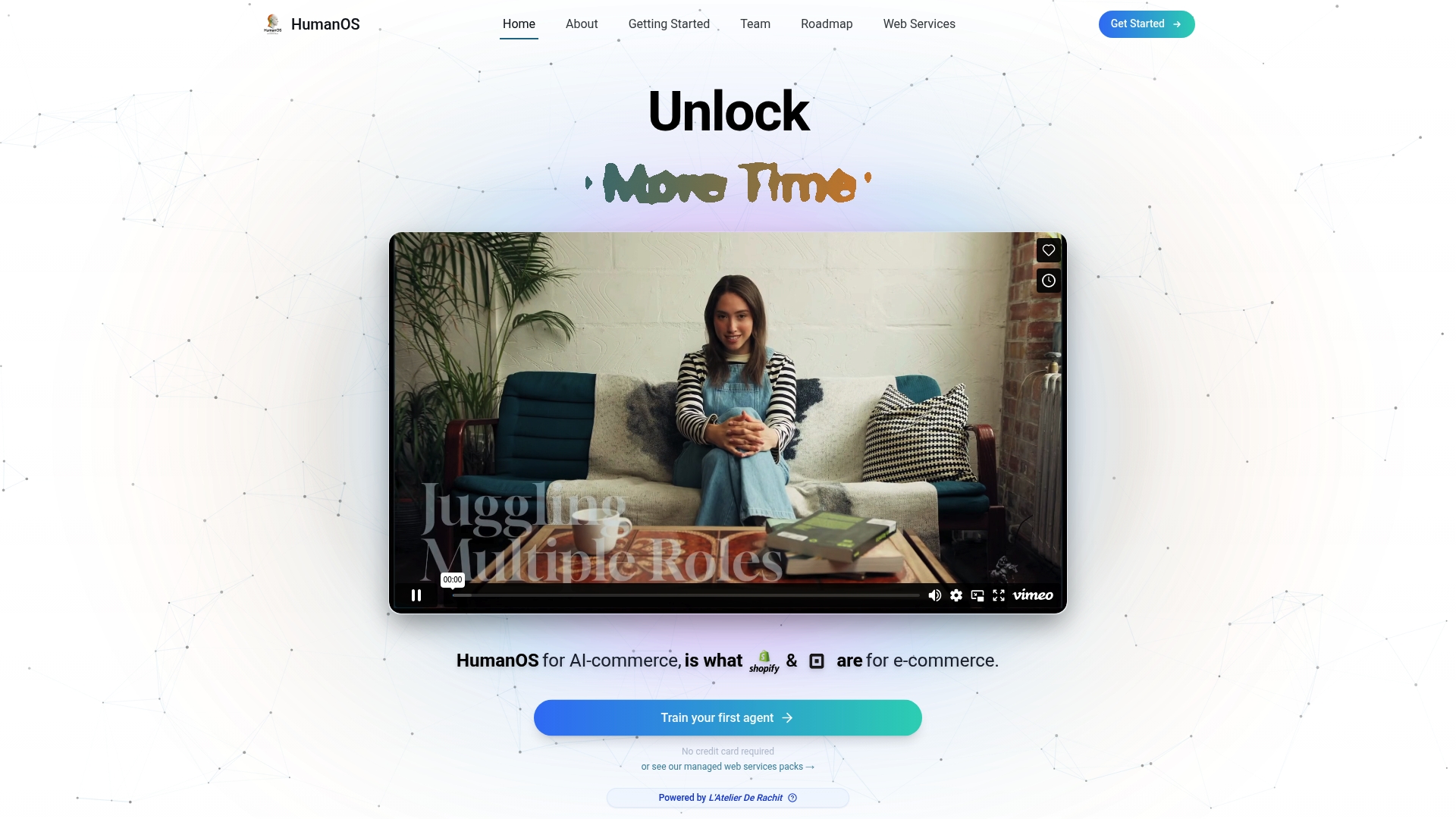
HumanOS is built specifically for business owners who are done patching together disconnected tools and manual workarounds. The platform gives you AI automation for SMBs through pre-built and custom workflows covering sales, customer service, scheduling, document processing, and more. No coding required. No credit card to start. The HumanOS platform deploys in days, not months, and is backed by a guaranteed 30% improvement in productivity and profitability. Visit 1humanos.com to explore what automation can do for your operation and start your free trial today.
Frequently asked questions
What are typical tasks businesses automate first?
Common starting points include invoice processing, email notifications, and report generation because these are high-volume repetitive tasks with clear rules and measurable output.
How quickly can you see results from workflow automation?
Most SMBs notice time savings and fewer errors within weeks of implementation. Automated workflows reduce process time and human error almost immediately for rule-based tasks.
Is automation expensive for small businesses?
Modern automation tools are now affordable and designed specifically for SMBs, with tiered pricing models that scale alongside your business rather than requiring large upfront investment.
Can automation help increase customer satisfaction?
Absolutely. Automation speeds up response times, reduces service errors, and enables personalised communication, all of which raise satisfaction scores. Automated customer service can cut response time by 75%, which customers notice immediately.