

TL;DR:
- AI and automation help SMBs cut costs and increase revenue by streamlining manual tasks.
- Automating workflows like invoicing and data entry provides quick, measurable ROI within months.
- Focused AI projects and clear success metrics are key to successful adoption and growth.
Profitability remains one of the most stubborn challenges for small and mid-sized businesses. You can have a great product, a loyal customer base, and a hard-working team, and still watch margins erode because too much time and money flows into manual tasks that should not require a human at all. AI and automation have moved well past the hype stage. They are now proven, accessible tools that SMBs are using to cut costs, increase output, and grow revenue without adding headcount. This article breaks down the top evidence-backed strategies, compares your options, and helps you decide where to start.
Table of Contents
- Automate workflows and invoicing for immediate gains
- Tap AI-driven marketing automation for higher conversions
- Leverage AI for advanced data analysis and predictive insights
- Overcome the risks: Implementation, cost, and culture
- Our take: Focus on practical steps, not just hype
- Ready to boost your business profitability?
- Frequently asked questions
Key Takeaways
| Point | Details |
|---|---|
| Automate core workflows | Cut manual work and errors with AI-driven processes to see rapid profit improvements. |
| Optimise marketing with AI | Smart automation personalises campaigns and lifts conversion and engagement rates. |
| Leverage predictive analytics | AI-powered insights help forecast demand and uncover high-impact growth opportunities. |
| Prepare for adoption risks | Start small, prioritise clear goals, and address cultural or data privacy challenges early. |
Automate workflows and invoicing for immediate gains
Manual processes are expensive in ways that are easy to underestimate. Every time someone copies data between systems, chases a late invoice, or reformats a report by hand, you are paying for that labour twice: once in wages and again in the opportunity cost of what that person could have been doing instead. For most SMBs, this adds up to thousands of dollars per month in hidden waste.
AI automation for SMBs targets exactly these friction points. Workflow automation tools can route approvals, trigger follow-up emails, update records, and generate invoices without a single manual step. The results are not marginal. Saving 20+ hours per month and reducing errors by 60 to 90% are benchmarks seen consistently across SMB case studies, with payback periods of just one to six months.
Here is where workflow automation delivers the fastest returns:
- Invoice generation and follow-up: Automated systems send invoices immediately after a job closes and follow up on overdue accounts without any manual prompting.
- Data entry and record syncing: AI tools eliminate duplicate entry by syncing data across your CRM, accounting software, and project management tools in real time.
- Approval workflows: Routine purchase orders, leave requests, and contract sign-offs can be routed and approved automatically based on predefined rules.
- Document processing: AI can extract key data from PDFs, contracts, and forms, cutting document handling time by more than half.
| Task | Manual time per week | Automated time per week | Time saved |
|---|---|---|---|
| Invoice generation | 5 hours | 20 minutes | 4.5 hours |
| Data entry and syncing | 8 hours | 30 minutes | 7.5 hours |
| Approval routing | 3 hours | 15 minutes | 2.75 hours |
| Document processing | 6 hours | 45 minutes | 5.25 hours |
Pro Tip: Start with your invoicing process. It is usually the single fastest win because it directly affects cash flow, and the ROI is immediately visible on your balance sheet.
Explore improving business workflows and workflow automation tips to identify which processes in your business are ready to automate first.
Tap AI-driven marketing automation for higher conversions
Back-office efficiency is a strong foundation, but the real profitability multiplier is top-line growth. That is where AI-powered marketing automation changes the game for SMBs.

Traditional marketing is time-consuming and often imprecise. You send the same email to your entire list, run one version of an ad, and hope for the best. AI flips that model entirely. It segments your audience automatically, personalises messaging based on behaviour, runs A/B tests continuously, and delivers campaigns at the optimal time for each individual contact.
The numbers are compelling. Marketing automation boosts conversions by 30% and saves 15 hours per week on tasks like email management and lead scoring for SMBs. Interaction rates increase by up to 74% when campaigns are personalised. That is not a small edge. That is a structural advantage over competitors still doing things manually.
Key capabilities to look for in an AI marketing automation platform:
- Behavioural list segmentation: Group contacts based on what they have clicked, purchased, or ignored, then tailor messaging accordingly.
- Automated lead scoring: Identify your hottest prospects automatically so your sales team focuses energy where it counts.
- Multi-channel campaign orchestration: Coordinate email, SMS, social, and paid ads from a single workflow without juggling separate tools.
- Real-time A/B testing: Let AI test subject lines, offers, and creative continuously and automatically shift budget toward what is working.
Stat to know: SMBs using AI-driven marketing automation tools report 30% higher conversion rates and 74% higher interaction rates compared to manual campaign management.
Personalisation also drives customer loyalty, which is worth more than a single conversion. When customers feel understood, they return, refer others, and spend more. AI makes that level of personalisation scalable without requiring a full marketing team.
Pro Tip: Connect your CRM to your marketing automation platform on day one. The richer the data flowing in, the smarter the segmentation and the better your results from the start. Review AI-driven strategies for SMBs for a practical framework to get started.
Leverage AI for advanced data analysis and predictive insights
Once your operations and marketing are running lean, the next frontier is smarter decision-making. Most SMBs are sitting on a goldmine of untapped data, sales history, customer behaviour, supplier performance, and seasonal trends, but lack the tools to turn it into actionable insight. AI changes that.
Predictive analytics tools analyse historical patterns and surface the decisions most likely to improve outcomes. Tools like Amazon SageMaker allow businesses to forecast demand, optimise inventory, and automate routine decisions without needing a data science team. Early adopters are seeing 91% revenue boosts and ROI figures as high as 1,800% in documented case studies.
Here is how to sequence your data analysis journey:
- Audit your existing data sources (CRM, accounting, website analytics, POS system).
- Identify your most costly unknowns (demand forecasting, customer churn, pricing accuracy).
- Choose a focused AI analytics tool aligned to that specific problem.
- Set a baseline metric before you start so you can measure impact clearly.
- Review outputs weekly and refine inputs based on what the model gets right or wrong.
| Analytics use case | Potential impact | Complexity to implement |
|---|---|---|
| Demand forecasting | Reduce overstock by 20 to 35% | Medium |
| Customer churn prediction | Retain 15 to 25% more customers | Medium |
| Dynamic pricing optimisation | Increase margin by 10 to 20% | High |
| Sales pipeline forecasting | Improve close rates by 15% | Low to medium |
"The businesses that win with AI are not the ones with the most data. They are the ones that ask the most focused questions of the data they already have."
Explore AI-driven profitability strategies to see which analytics applications are delivering the strongest returns for businesses at your stage.
Overcome the risks: Implementation, cost, and culture
The upside of AI is real, but so are the pitfalls. Ignoring them is how businesses end up with expensive tools that nobody uses and problems that get worse, not better.
The most common barrier is complexity. 73% of SMBs find AI tools complex or expensive to implement, and fewer than 20% successfully integrate AI across their operations. That gap between interest and execution is where most of the money gets wasted.
Here are the risks you need to plan for:
- Resource overextension: Trying to automate everything at once stretches your team thin and produces poor results across the board. Focus is not optional; it is a requirement.
- Data privacy and compliance: AI tools that process customer data must meet privacy regulations. Understand what data your tools collect, where it is stored, and who can access it before you go live.
- Ethical and bias risks: AI systems trained on incomplete or skewed data can produce biased outputs. Privacy and ethical lapses in AI adoption have real financial and reputational consequences.
- Cultural resistance: Your team may fear that automation threatens their roles. Without clear communication about how AI supports rather than replaces people, adoption stalls.
- Integration failures: Many AI tools do not connect cleanly with legacy software. Validate compatibility before purchasing, not after.
"Most AI failures in SMBs are not technology failures. They are strategy failures. The tool worked exactly as designed. The problem was that nobody defined what success looked like before they started."
The path to operational efficiency with AI runs through planning, not just purchasing. Start with one process, measure the outcome, and use that success as your proof of concept before expanding. Review boosting operational efficiency and the broader picture of AI integration challenges to build a realistic roadmap.
Our take: Focus on practical steps, not just hype
Here is something the AI conversation often glosses over: SMBs are actually better positioned than large enterprises to adopt and benefit from automation quickly. You have fewer legacy systems, faster internal decision-making, and a tighter feedback loop between action and result. That is a genuine advantage. But it only matters if you use it strategically.
The businesses we see struggle with AI adoption almost always share one trait: they chose the tool before they defined the problem. They saw a demo, got excited, and signed up. Six months later, the tool is running but nothing measurable has changed.
The SBA's guidance on AI for small business is clear: 91% of early adopters see revenue gains, but only 18% fully adopt AI across their operations. That gap exists because starting is easy and sustaining is hard without a clear outcome to chase.
Our advice is simple. Pick one area where you can clearly measure before and after. Automate it. Measure the result. Then use that win to build internal confidence and expand. Follow a step-by-step AI productivity guide rather than trying to build a strategy from scratch. Practical iteration beats ambitious overreach every time.
Ready to boost your business profitability?
If the strategies in this article resonate, the next step is finding the right tools and support to put them into practice without wasting time or budget on trial and error.
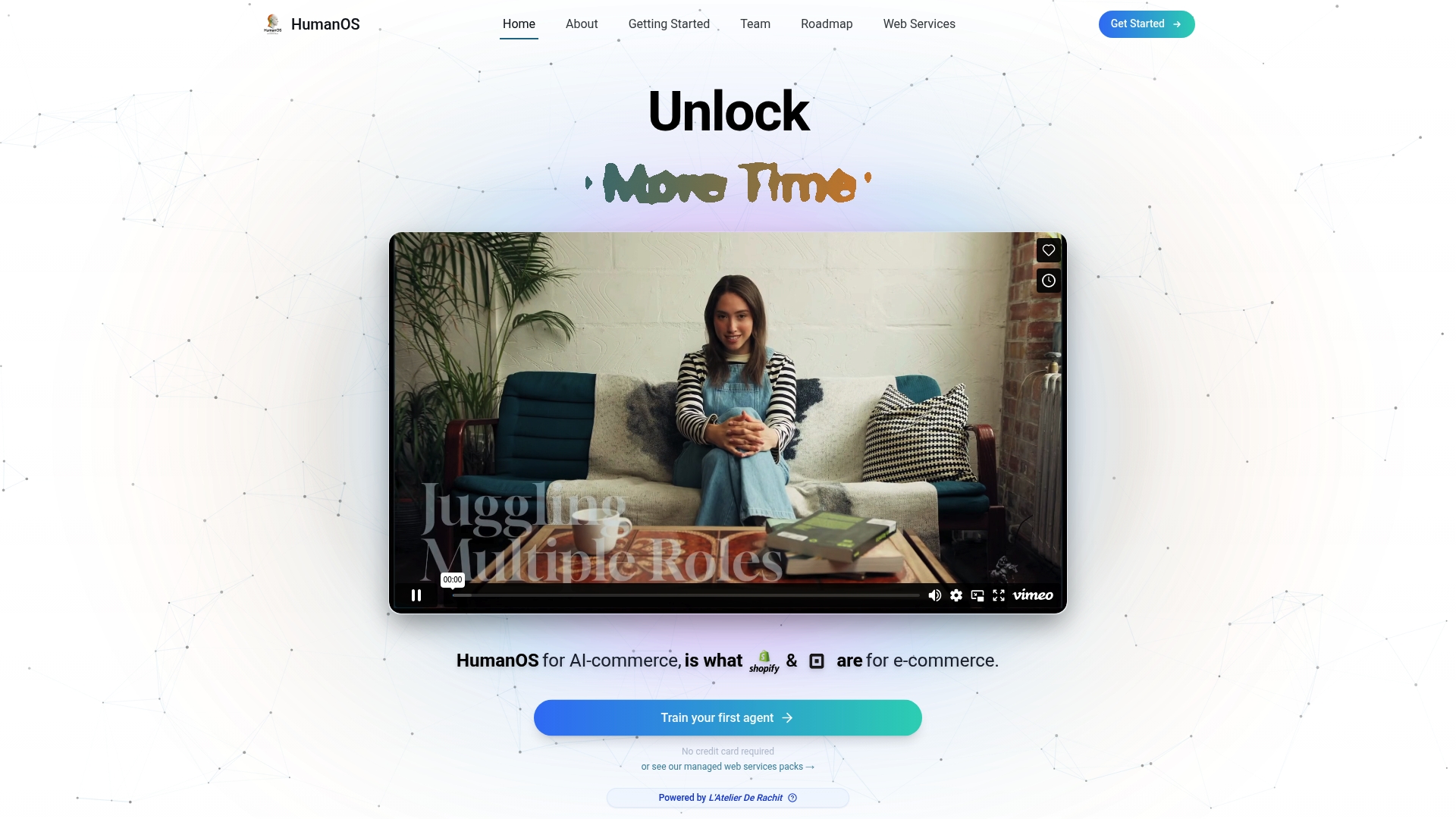
HumanOS is built specifically for SMBs that are ready to automate operations, improve profitability, and stop losing hours to tasks that AI can handle. From AI agents that manage email, scheduling, and customer support, to fully managed web services that build and optimise your digital presence, the platform is designed to deliver measurable results fast. Explore AI automation web services tailored to your business stage, or visit the HumanOS automation platform to start your free trial today. No credit card required.
Frequently asked questions
What is the fastest way to boost profitability in an SMB?
Automating manual workflows and invoicing with AI offers some of the quickest profitability gains, often paying back in 1 to 6 months and saving 10 to 40 hours per week. It is low risk, immediately measurable, and directly improves cash flow.
Is AI too expensive or complex for small businesses?
While 73% of SMBs find AI tools challenging, starting with a single, focused automation project makes the technology accessible and affordable. Complexity drops significantly when you narrow your scope before you start.
How does AI-driven marketing automation impact conversion rates?
AI-powered marketing automation can increase conversion rates by 30% and boost interaction rates by 74% for SMBs by personalising campaigns and automating lead scoring and delivery timing.
What are common risks with adopting AI in small businesses?
The main risks include resource overextension, slow integration, data privacy issues, and cultural resistance from staff. Most are manageable by starting small, defining clear success metrics, and choosing tools that fit your existing systems rather than requiring a full infrastructure overhaul.
Recommended
- Profitability optimisation: AI-driven strategies for SMBs
- AI in business: boost efficiency and profit in 2026
- Boost your business efficiency with AI productivity tips in 2026
- How to boost operational efficiency with AI automation
- Harnessing AI in audit: efficiency, quality, and skills for 2026
- Ultimate Guide to Accounting Automation in 2025 - Ready Accounting