

TL;DR:
- Most SMBs struggle to identify which workflows will yield measurable results from AI automation. Using a structured evaluation approach helps ensure AI is applied where it handles variability and adds value, avoiding unnecessary complexity. Platforms like Microsoft Copilot Studio and Zapier demonstrate how combining deterministic steps with AI reasoning can significantly improve efficiency and scalability.
Most small and mid-sized business owners know AI can improve how they work, but knowing which workflows actually deliver results is a different challenge entirely. You can read a dozen case studies and still feel uncertain about where to start. The gap between "AI can help" and "here's exactly what to automate and how" leaves many SMB operators stuck in a cycle of trial and error, wasting time and money on tools that don't move the needle. This article gives you a practical framework for evaluating AI workflows, showcases real examples from leading platforms, and helps you make confident, low-risk decisions about where AI fits in your operations.
Table of Contents
- What makes a great AI workflow for SMBs?
- Microsoft Copilot Studio: Examples of powerful agent-driven workflows
- Zapier AI workflow case studies: Fast automation wins for SMBs
- Enterprise playbook: Orchestrating end-to-end AI workflows with NVIDIA AI factory
- Why context-driven AI workflows outperform rigid automation
- Take your business further with unified AI workflow solutions
- Frequently asked questions
Key Takeaways
| Point | Details |
|---|---|
| Start with criteria | Effective AI workflows combine clear structure with flexible AI-driven reasoning. |
| Real-world results | SMBs report major time and revenue gains from AI workflows, especially for repetitive or data-heavy tasks. |
| Monitor for success | Tracking workflow performance using dashboards ensures reliability and ongoing improvement. |
| Leverage best practices | Even small businesses can borrow orchestration and observability methods from enterprise AI leaders. |
What makes a great AI workflow for SMBs?
Not every automated process qualifies as a genuine AI workflow. And not every AI workflow suits an SMB context. Before you invest time or resources into any new system, it pays to run each option through a consistent evaluation lens.
Improving business workflows with AI starts with understanding the anatomy of what you're building. Microsoft frames SMB AI workflows as structured, deterministic workflows combined with AI agent steps that handle reasoning and flexibility at specific decision points. That distinction is important. Not every step needs AI, and over-applying it creates unnecessary complexity.
Here are the key criteria every SMB should evaluate before committing to any workflow solution:
- Clear structure. Map out which steps are deterministic (things that always happen the same way) versus which steps require AI reasoning to handle varied or unstructured inputs. Mixing these up wastes both time and compute resources.
- Seamless handoff. Data needs to move cleanly between the AI reasoning layer and the broader workflow system. Broken handoffs are the number one cause of failed automations in small business environments.
- Visibility. You need to see what the AI is doing and why. A black-box workflow that silently fails is worse than no automation at all. Look for platforms that log actions, surface errors, and let you validate AI decisions before they trigger downstream consequences.
- Adaptability. The best AI workflows handle variable inputs without requiring constant human intervention. If you need to babysit every run, you have not actually automated anything.
- Measurable outcomes. Before you deploy, define success. Are you measuring time saved, error rate reduction, lead volume, or revenue? Without a baseline metric, you cannot know if the workflow is delivering value.
Pro Tip: Before choosing a tool, sketch your workflow on paper. Identify the two or three steps that vary the most unpredictably. Those are your AI insertion points. Everything else can stay deterministic and rule-based.
Microsoft Copilot Studio: Examples of powerful agent-driven workflows
Microsoft Copilot Studio is one of the most capable platforms for SMBs that want to blend structured automation with genuine AI reasoning. It is particularly well-suited for businesses already operating within the Microsoft ecosystem, including Teams, SharePoint, and Power Automate.
Copilot Studio enables agent flows that blend structured workflow logic with AI-driven reasoning, using conditions, loops, and integrations to handle complex, real-world business scenarios. Here are three workflow patterns worth studying closely.
Procurement and contract review
Supplier contracts are notoriously inconsistent. Terms vary, formats differ, and key clauses get buried. An AI agent step within a Copilot Studio workflow can read incoming contract documents, extract key variables (payment terms, liability clauses, renewal conditions), flag anomalies, and populate a structured review form automatically. What once took a staff member 45 minutes per contract can be reduced to a few minutes of human review.

Customer service refund handling
Rather than routing every refund request through a human agent from the start, Copilot Studio can deploy an AI-driven flow that reads incoming requests, validates eligibility based on purchase history and policy rules, initiates approved refunds, and logs the outcome. Workflow patterns covering refund initiation and account updates demonstrate genuine reductions in ticket volume and handling time for businesses of all sizes.
Approval routing and intelligent notifications
Approval bottlenecks are one of the biggest hidden productivity drains in SMBs. An AI agent can synthesise context from multiple sources, including emails, forms, and CRM data, to determine urgency and route approvals to the right person with the right information already included. Once a decision is made, the workflow logs it, notifies affected parties, and triggers any dependent actions automatically.
"The real value of agent-driven workflows is not just speed. It is the ability to handle variability at scale, something purely rule-based automation cannot do."
Pro Tip: Start with your most variable, document-heavy process. AI genuinely excels at creating structure from chaos. Once you see results there, it becomes much easier to identify your next workflow candidate.
One significant advantage of Copilot Studio is its conversion path. If your business already uses Power Automate, existing flows can be converted into AI-enhanced agent flows without rebuilding from scratch. For businesses exploring workflow automation tips to boost productivity, this upgrade path removes a common barrier to adoption.
Businesses that want to boost profitability with AI will find Copilot Studio particularly compelling because it connects directly to existing data sources, meaning the AI is reasoning with real business context, not generic assumptions.
Zapier AI workflow case studies: Fast automation wins for SMBs
Beyond enterprise-grade platforms, Zapier proves that lean, accessible tooling can deliver massive efficiency gains when combined with AI. For SMBs that do not want to manage complex infrastructure, Zapier's AI-enhanced automations offer a fast, low-friction entry point.
Zapier customers including Flow Digital, Contractor Appointments, and Easy Aiz report hundreds of hours saved and millions in attributed revenue from AI workflow automation. Here are the standout case study patterns worth understanding.
Order processing automation
Flow Digital, an e-commerce brand, used Zapier with an AI step to clean and standardise incoming order data from multiple sources before syncing it to their fulfilment system. The result was a 70% reduction in order processing time and over 100 hours saved monthly. The AI step handled the messy part: normalising inconsistent data formats before any downstream action ran.
Inbound lead handling at scale
Contractor Appointments deployed an AI-powered Zapier workflow to parse inbound messages from multiple channels, qualify leads, and send personalised top-of-funnel replies. The outcome was significant: $134 million in attributed revenue with 80 to 90 percent of initial lead responses now fully automated. One person manages a volume of communication that previously required a full team.
Content publishing workflows
Creative agencies and solo operators use AI-enhanced Zaps to automate content publishing sequences, from drafting to scheduling to distribution, without any manual handoffs between tools. The AI step converts raw content briefs into structured publish-ready formats.
Here is a quick comparison of the measurable outcomes across documented Zapier AI workflow deployments:
| Business | Workflow type | Outcome |
|---|---|---|
| Flow Digital | Order processing | 70% time reduction, 100+ hours/month saved |
| Contractor Appointments | Lead handling | $134M revenue, 80-90% replies automated |
| Smith.ai | Call review | 250 hours saved weekly, 5,000 calls reviewed |
| Easy Aiz | Mixed automation | Significant manual effort eliminated |
The critical insight behind these results: every high-impact AI step in these workflows does one thing consistently. It converts unstructured data into structured data before passing it downstream. That single pattern, applied repeatedly, is what drives the compounding returns. Discover how SMB productivity with AI scales when even a single well-designed automation is layered with additional use cases over time.
Smith.ai saves 250 hours weekly by using a single Zap to review 5,000 calls. That is not a complex enterprise system. That is one well-designed workflow with an AI step in the right place.
Pro Tip: Even small automations have compounding effects. Start with one high-frequency task, measure the time saved, and use that data to justify expanding. Momentum builds fast once you see real numbers.
Enterprise playbook: Orchestrating end-to-end AI workflows with NVIDIA AI factory
Looking at enterprise-grade AI workflow architecture reveals orchestration strategies that scale down surprisingly well to SMB environments. The NVIDIA AI factory model is a useful reference point, even if your business is nowhere near that size.
The NVIDIA AI Factory approach unifies the entire AI lifecycle into orchestrated, monitored pipelines from infrastructure provisioning through to workload delivery. The underlying principles translate directly to any business trying to run AI workflows reliably at scale.
Here are the key orchestration practices worth borrowing:
- Validated infrastructure components. Using standardised, tested components means easier troubleshooting and repeatable results. For SMBs, this means choosing platforms with clear documentation and proven integration paths rather than cobbling together untested tools.
- Workload orchestration. Automatically managing which processes run, when they run, and on what resources eliminates the manual coordination that slows most small business operations down. Think of it as an air traffic controller for your automations.
- Real-time observability. Prometheus and Grafana dashboards provide real-time visibility into workflow health and performance. SMBs do not need the same infrastructure, but the concept applies: you should always know what your workflows are doing, not discover failures days later.
- Iterative improvement loops. Enterprise AI factories build in feedback mechanisms that feed performance data back into workflow design. Even in lightweight SMB toolsets, scheduling a monthly workflow review against your baseline metrics mirrors this practice effectively.
"Reliability and transparency scale down just as well as they scale up. The principles that make enterprise AI workflows trustworthy are the same ones that protect your business data and outcomes at any size."
Here is how the two approaches compare:
| Dimension | App automation (SMB) | Orchestrated AI factory (enterprise) |
|---|---|---|
| Complexity | Low to medium | High |
| Observability | Basic logging | Real-time dashboards |
| Resource management | Manual | Automated orchestration |
| Failure recovery | Manual restart | Automated retry and alerting |
| Scalability | Moderate | Designed for massive scale |
The practical SMB takeaway from studying this model: invest in AI operational efficiency by building visibility into every workflow you deploy. Even a simple logging system that sends you a weekly summary of what ran and what failed is better than operating blind. Understanding the role of AI in business efficiency means recognising that orchestration is not just an enterprise concern. It is a reliability habit.
Why context-driven AI workflows outperform rigid automation
Here is an angle that most workflow guides completely miss: rigid automation is not just limiting, it is often actively harmful when business conditions shift.
Rule-based automations are designed around a known set of conditions. The moment something unexpected happens, such as a supplier changing their invoice format, a customer submitting a request in a new language, or a product category being renamed, the workflow breaks. And it usually breaks silently. You only find out when a lead goes uncontacted for a week or an order sits unprocessed for three days.
AI workflow ROI is highest when combining deterministic steps for consistency with agent-driven reasoning for adaptability. That combination is not just a technical preference. It is a business continuity strategy.
The businesses that get the most from AI workflows are not the ones who automate the most. They are the ones who automate the right things with the right level of intelligence at each step. Keeping structure where predictability matters and inserting AI reasoning only where variability is genuinely present. That discipline is what separates durable, high-ROI workflows from fragile automation that requires constant maintenance.
Our recommendation: layer in AI one process at a time. Measure after every addition. If a workflow requires more human intervention after you added AI than before, you have either chosen the wrong process or inserted AI at the wrong step. Revisit the criteria from the first section and adjust. This iterative approach to improving team productivity with AI is how the businesses in this article achieved results that compound, rather than decay, over time.
Operators who stop firefighting and start innovating are almost always the ones who designed their AI workflows with both structure and adaptability in mind, not one or the other.
Take your business further with unified AI workflow solutions
The workflows and case studies in this article demonstrate one consistent truth: the gap between where most SMBs are and where they could be is smaller than it looks. The right platform removes the technical barriers and gets you to measurable results fast.
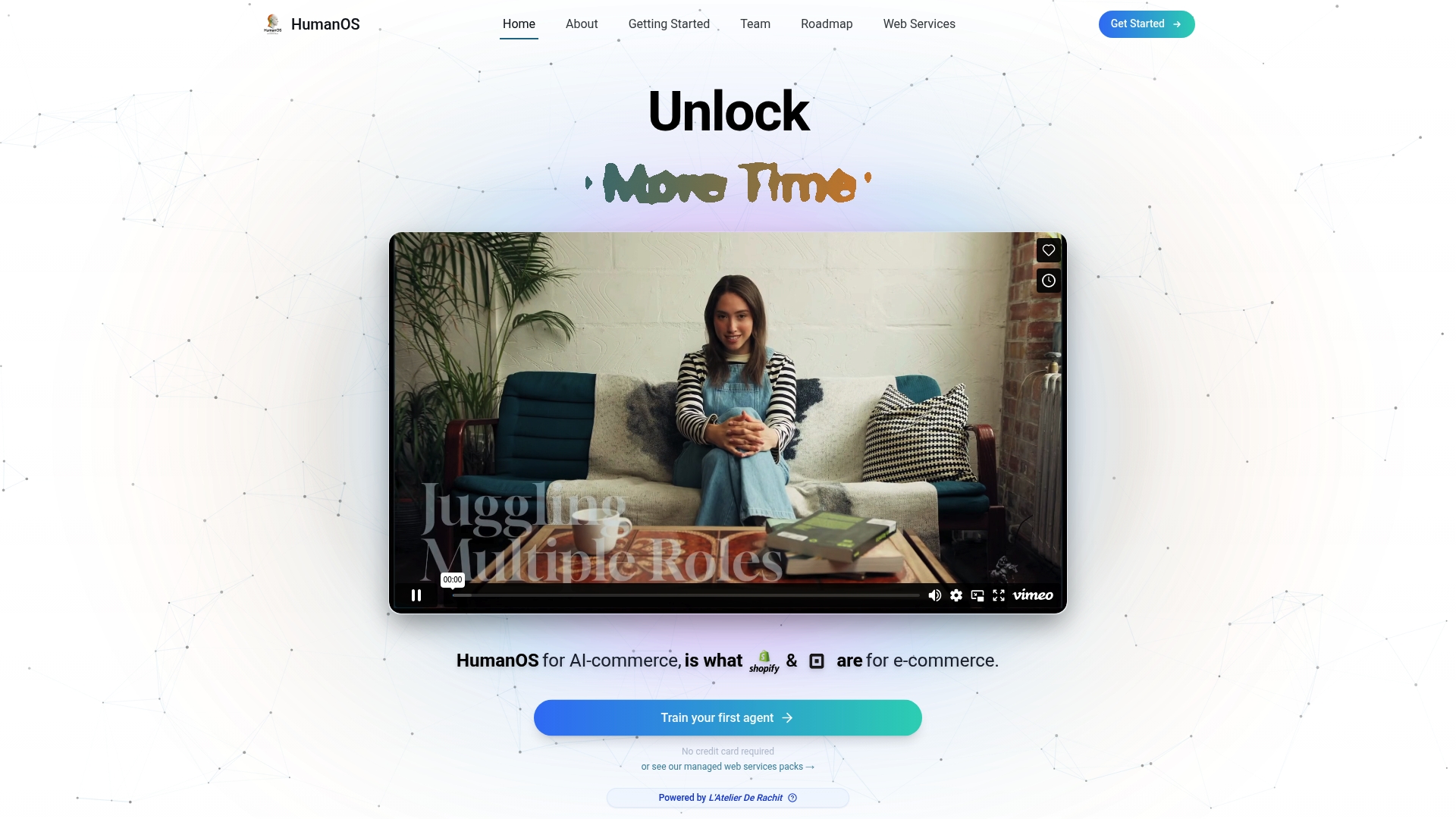
HumanOS is built specifically to close that gap for small and mid-sized businesses. Whether you are starting with a single automation or ready to orchestrate a full suite of AI-driven operations, HumanOS brings the structure, visibility, and adaptability this article describes into a single managed platform. Explore the AI workflow operating system built for businesses ready to stop duct-taping their digital infrastructure together, and see how you can automate with AI agents across email, scheduling, document processing, customer support, and more. No coding required. No credit card needed to start.
Frequently asked questions
What types of business processes benefit most from AI workflows?
Processes with repetitive data entry, variable document formats, or high volumes of incoming requests benefit most from AI-driven automation. Examples include inconsistent contract evaluation and inbound lead handling, where AI excels at converting unstructured inputs into structured, actionable data.
How can SMBs measure the ROI of an AI workflow?
Track hours saved, reduction in manual errors, and increases in processed volume or revenue directly linked to the workflow. Flow Digital and Contractor Appointments reported measurable time and revenue improvements after deploying AI workflows, providing a useful benchmarking model for other SMBs.
What are best practices for monitoring AI workflow health?
Use dashboards and observability tools to monitor performance and catch issues early, rather than discovering failures after the fact. NVIDIA recommends Prometheus and Grafana for real-time monitoring within AI workflow pipelines, and the same principle applies to SMB-scale implementations.
Can existing automations be upgraded with AI, or must they start from scratch?
Existing workflows can often be upgraded to AI-driven agent flows without rebuilding from scratch. Microsoft Copilot Studio allows Power Automate flows to be converted into agent flows, giving SMBs a practical migration path rather than a complete rebuild.